History and the Future
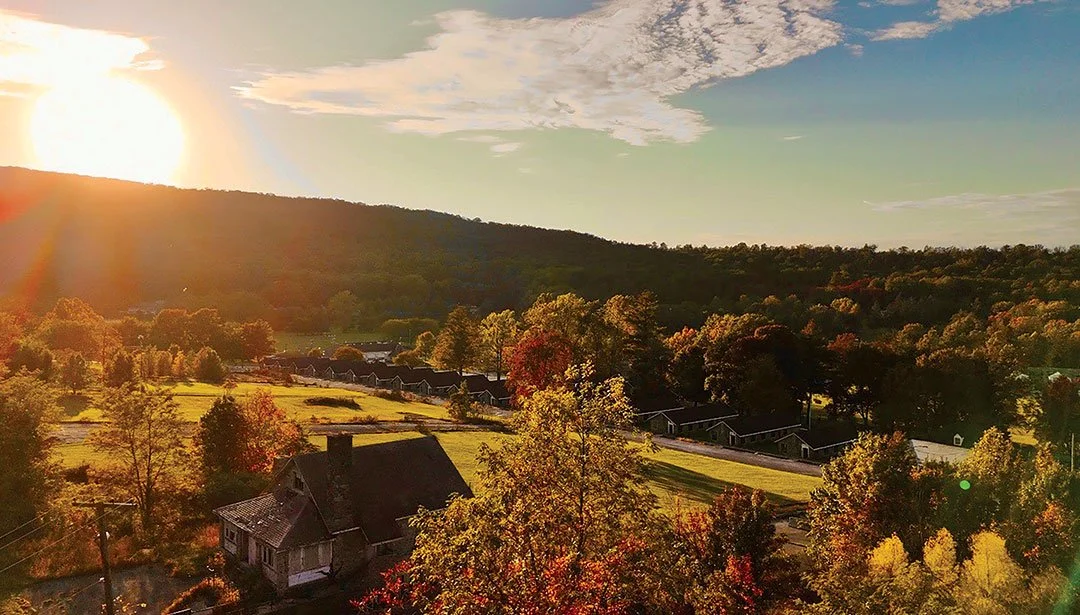
The sun sets behind a mountain near Fort Ritchie, where the 35 finger buildings have been renovated.
The on-going revival of Fort Ritchie is preserving history while bringing new life to an old Army installation
By Erin Jones
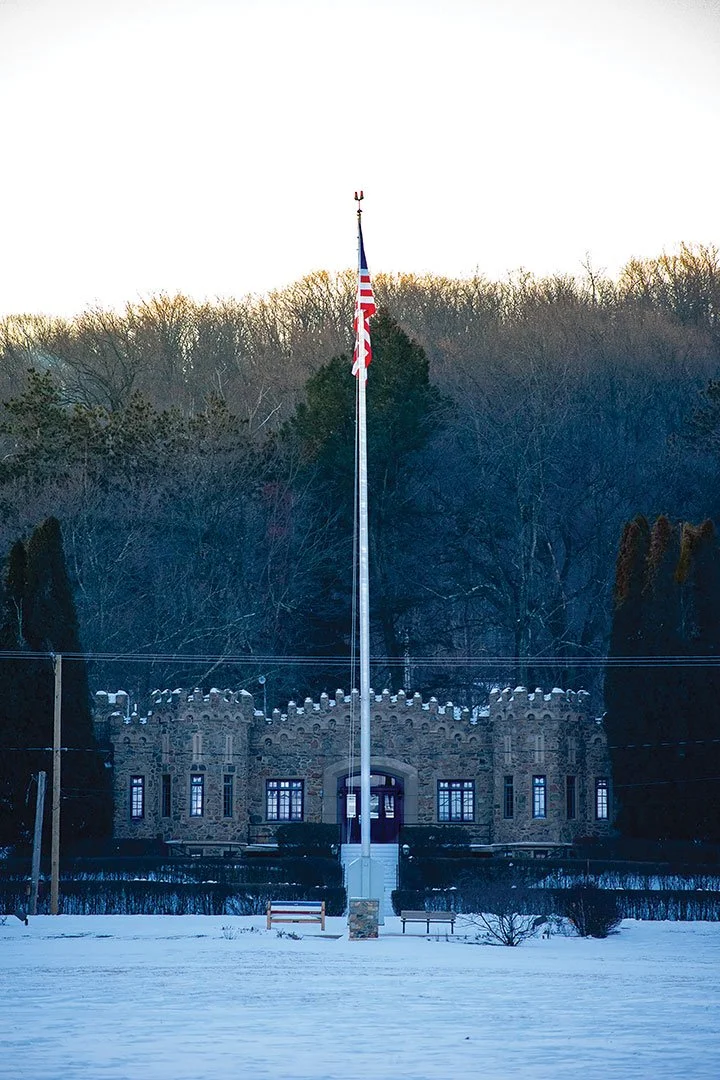
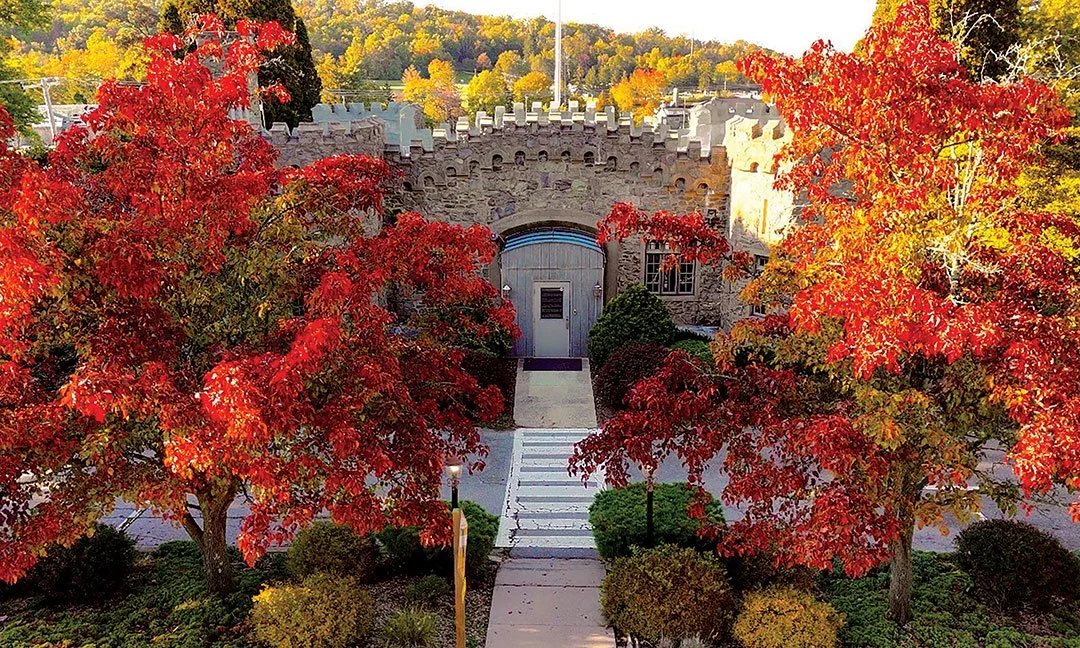
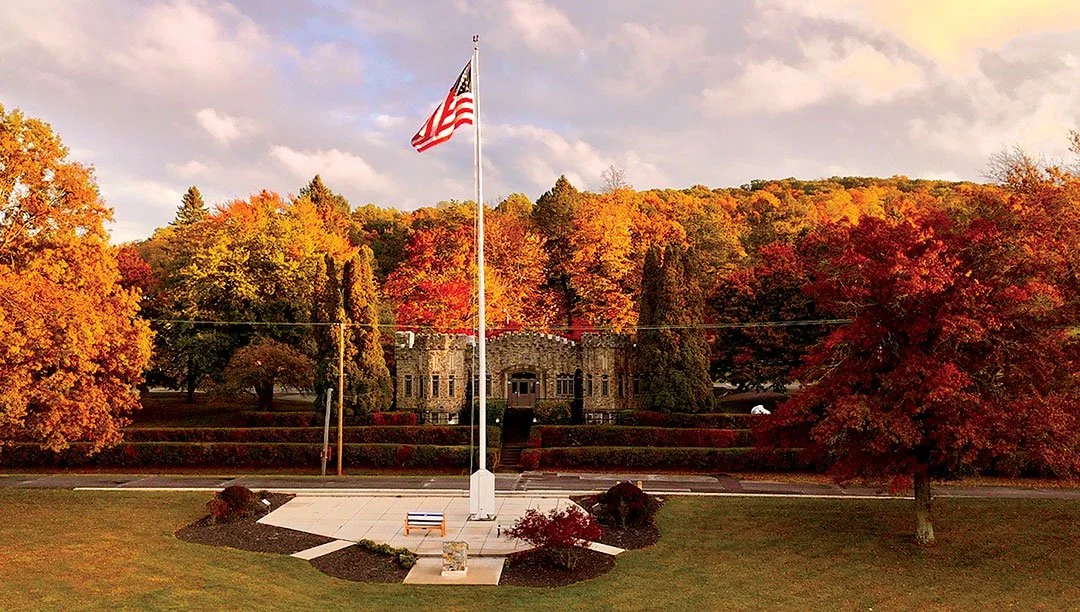
The Castle is the most iconic building at Fort Ritchie. It was built in 1927 by the Maryland National Guard, for the purpose of a post headquarters. Today it is used by the Ritchie Revival team for meetings.
For more than 50 years Fort Ritchie was closely guarded by mountains, stone-turreted gates, and secrecy. The 638-acre Army installation in Washington County, tucked just beneath the Pennsylvania border, served as the World War II training site for the interrogators and psychological warfare experts who became known as the Ritchie Boys. By the time information about the Ritchie Boys became declassified, the facility had fallen into disrepair. It was closed in 1998 under a military base realignment.
Now, thanks to a multi-year revival project, the grounds are not only open to the public but becoming a vibrant community once more. Both developers and historians are working hard to preserve and honor the rich history that unfolded within the gates.
Named for former Maryland Gov. Albert C. Ritchie, Camp Ritchie opened in 1926 as a Maryland National Guard summer training facility. Under the design and direction of base engineer Robert Barrick, 300 men from Hagerstown built the facility.
When WWII began, the army leased the property and began recruiting trainees to the Military Intelligence Training Center at Camp Ritchie. While the moniker “Ritchie Boys” has become popularized, 200 Women’s Army Corps also played an important role in Fort Ritchie’s history.
Recruits trained at Fort Ritchie in skills like interrogating prisoners of war, battlefield intelligence, and intercepting enemy communications. David Frey, history professor and director of the Center for Holocaust and Genocide Studies at the United States Military Academy at West Point, told “60 Minutes” in 2022 that more 60 percent of actionable intelligence gathered at the battlefield was obtained by Ritchie Boys.
Many of the Ritchie Boys were Austrian or German-speaking immigrants, often Jews who fled Nazi persecution, giving them a linguistic advantage and insider knowledge into the nuances of the culture and mindset of the German soldiers.
The Ritchie History Museum seeks to preserve and recount those stories of heroism that were once a deeply guarded secret.
“Without their efforts we would possibly have still won the war, but it would have taken them much longer,” says museum director Katy Self. “I like to bring to light the sacrifices that they all made in service. We want to tell the stories of Fort Ritchie, but we can’t do that without telling the stories about veterans as well.”
Because the details of Fort Ritchie were classified for so many decades, Self often fields requests from families who suspect a loved one may have been at Fort Ritchie during their service in the war. Plans are underway to open Ritchie History Museum Research Center as an additional resource.
The Ritchie Museum is in the unique position of its historic preservation unfolding in real time as the Ritchie Revival is underway. As the buildings around the property are renovated, the Ritchie Revival construction team will send photos and descriptions of what they find.
One day, paint scraped away revealed Gothic German writing that contained a reference to the Third Reich. Trees behind the Mountain Top Ice Cream shop were found to be riddled with bullets from the area’s former life as a utility field. Of course, many vintage cans of Old German beer have also been uncovered.
““We want to tell the stories of Fort Ritchie, but we can’t do that without telling the stories about veterans as well.” ”
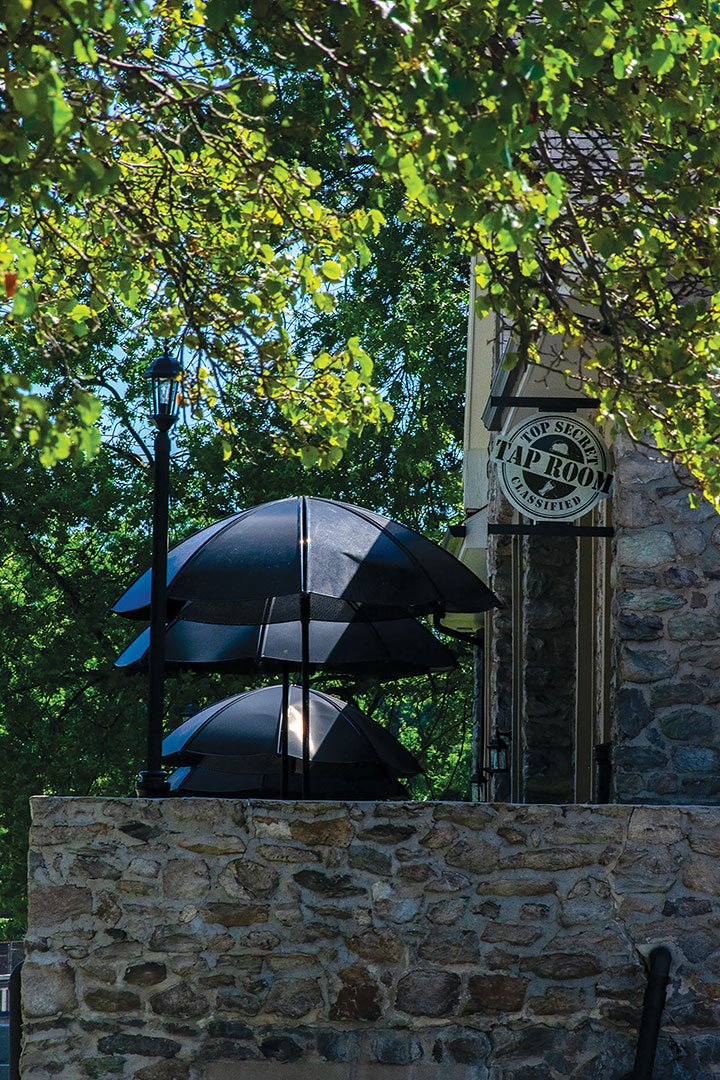
Old German beer is now served at the Top Secret Taproom. Situated just across the way from the museum, the taproom plays homage to the clandestine activities of the property’s former life and is an example of one the many ways the Ritchie Revival is injecting new life into the facility while honoring its rich history.
The Top Secret Taproomplays homage to the clandestine activities of Fort Ritchie’s former life.
John Krumpotich, owner and president of Ritchie Revival, first learned of the Ritchie Boys at an event at the Fort Ritchie community center a decade ago. At the time, the community center was the only structure on the property that was still functioning. The rest of the property was abandoned and frequently vandalized. He noted how many structures of historic significance were covered over in vines or rusted. While Ritchie Revival would eventually be the name of the company, for Krumpotich and his wife Joyce, it became a rallying cry.
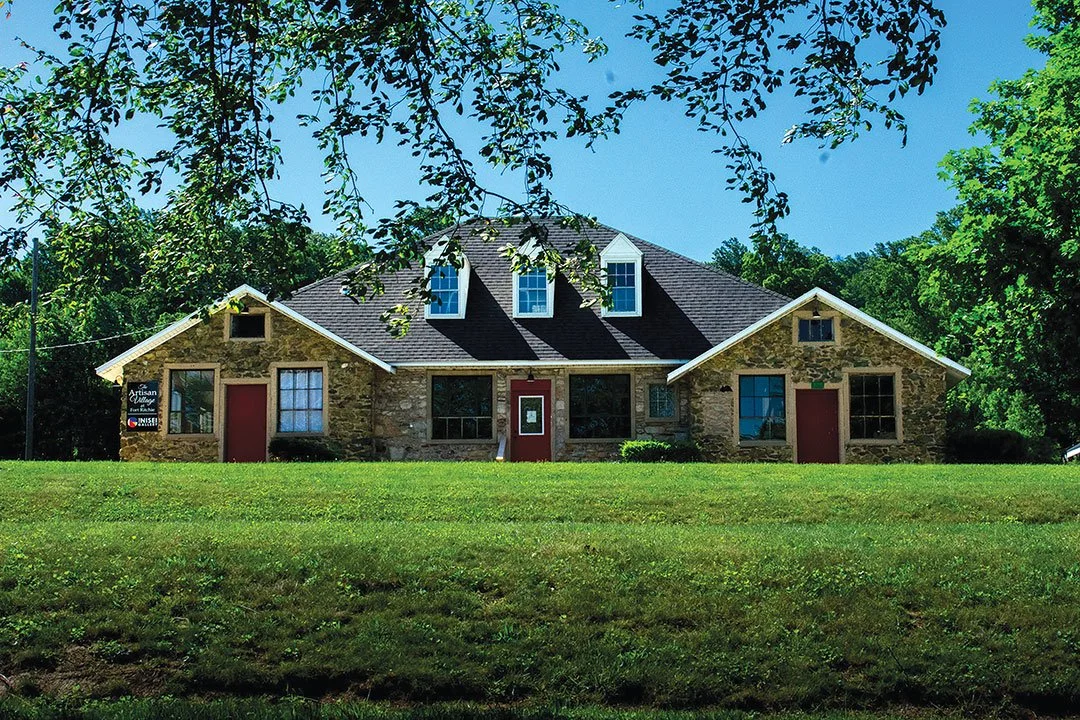
The Nisei Gallery and Artisan Village.
Ritchie Revival began in 2021 with the renovation of nearly 60 townhomes. Harman Automotive was the first business to open on the site, along with Mountain Top Ice Cream shop. Meritus Medical quickly followed, along with Greenhouse Café. Run by Krumpotich’s two daughters, the café occupies the 1920s home of Robert Barrick.
Informational signage outside the café, the white-steepled chapel, and many other notable landmarks were funded by the Delaplaine Foundation and allows visitors to appreciate the historic significance of the many structures throughout the property.
Nearly all of the 35 pristinely uniform houses called the “finger buildings” have been renovated. While the majority are residential units, seven have been turned into little shops and storefronts. Visitors can browse easily between shops like holistic health and wellness store Apotheke Dujardin, Sweet Thyme Bakery, locally sourced general store Ritchie Rations, the Artisan Village at Fort Ritchie, and the Nisei Gallery.
Downhill from the shops, Tudor-inspired Lakeside Hall overlooks Lake Royer. Lakeside Hall is now a functional event venue. Discovery Station recently relocated to the property from Hagerstown to continue its mission to ignite a passion for learning science, technology, engineering, arts, and mathematics (STEAM). Future projects will include a nature center and a hotel.
In the meantime, Ritchie Revival works in collaboration with the Maryland Historic Trust, which must approve any changes to the property. While the supervision requires extra steps, Krumpotich says it helps keep the project grounded in history.
“The place speaks to history, not only from World War II. This place was an integral part in the U.S. winning World War II, but all of the military and civilians that came through this place, tens of thousands of people who had a great impact on the area,” Krumpotich said. “I still get goosebumps talking about it now.”
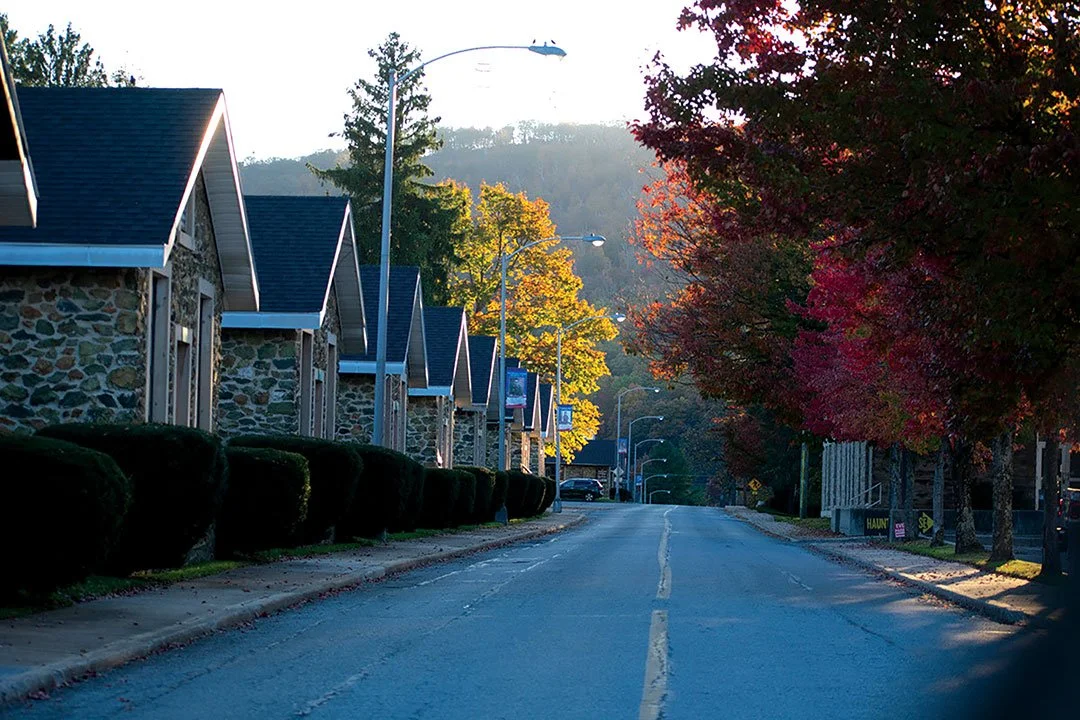
A street-level view of the Fort Ritchie finger buildings.