A Story of Resilience
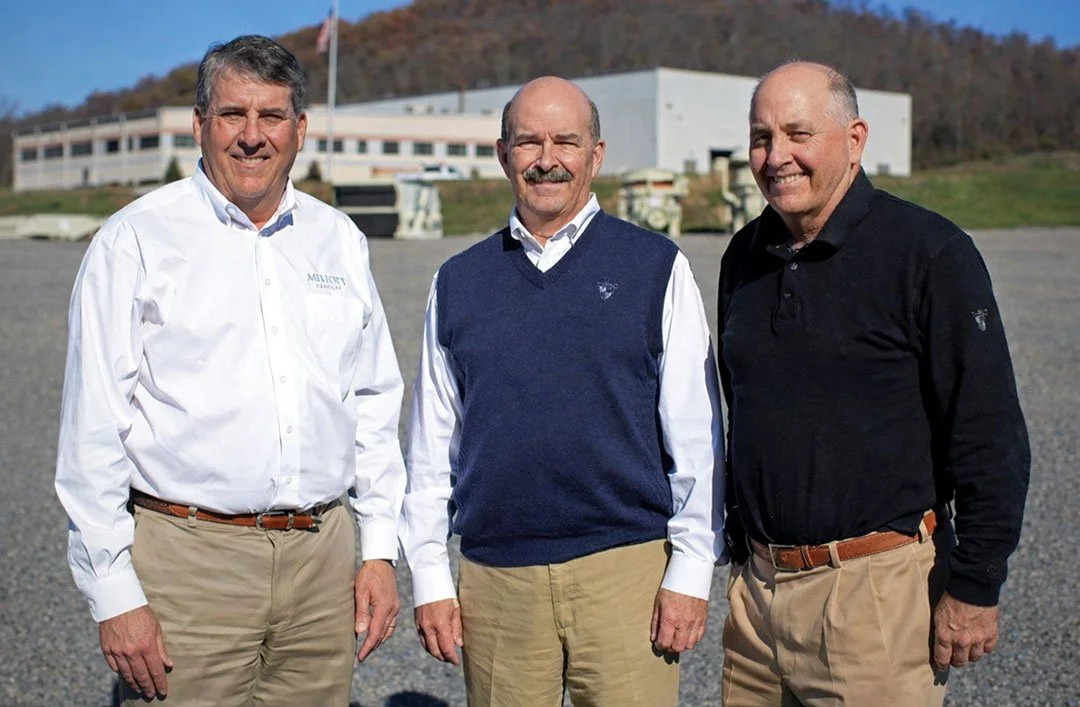
Brothers Brian, Paul, Jr., and Herman Mellott.
Through the Great Depression, wars, and tragedy, the Mellott Company has built a legacy of excellence for future generations
By Jennifer Mellace
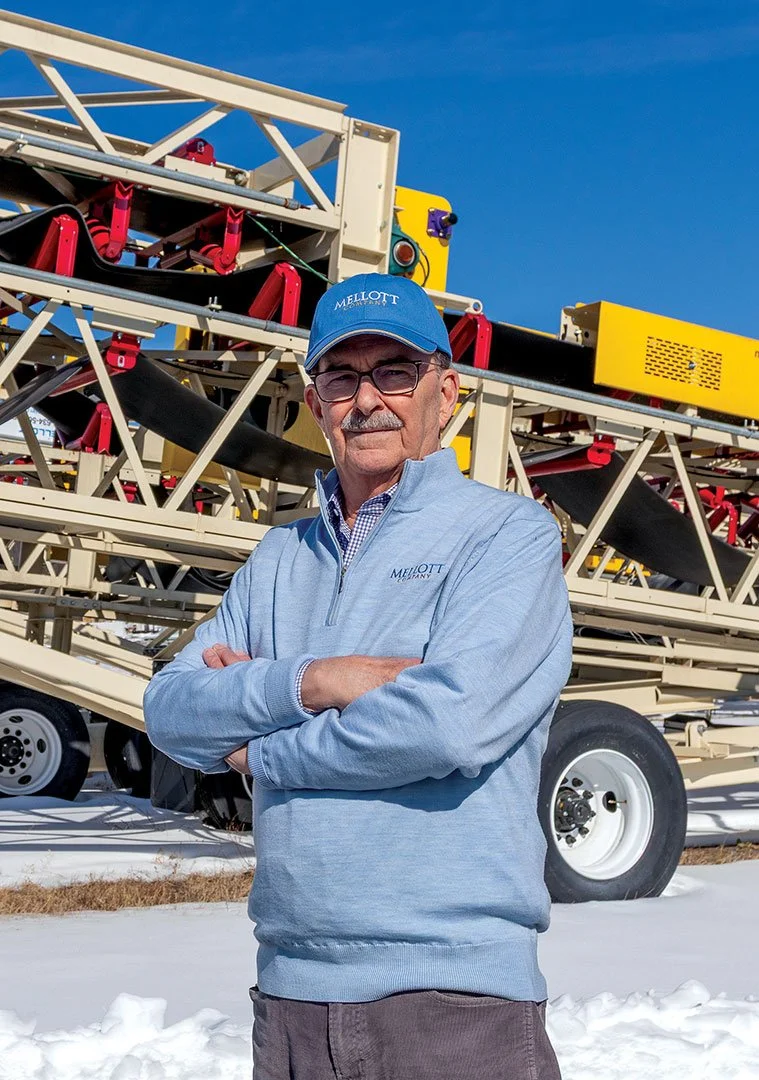
Paul Mellott Jr.
As a teenager, ambitious Herman Benjamin Mellott volunteered to serve in World War I. But the U.S. Army told the boy he was too young to fight and sent him home to Fulton County, Pennsylvania. Disheartened, the boy known locally simply as H.B., funneled his energy into other passions.
In 1920 the young Mellott had a vision and lots of gumption, and he embarked on a business venture that, sadly, he would not live to see turn into an enormous success. Now more than a century later, the Mellott Company remains family owned and has likely become much more than H.B. could have ever imagined.
The story of the Mellott Company, H.B. Mellott, and his sons and grandsons who have grown the company is one of humble beginnings, continual reinvention, pivoting to meet new demands—and tragedy.
Just out of his teens, H.B. Mellott started a lumber business. He purchased a World War I Liberty Army surplus truck and a small sawmill. Two years later, he married Amy Barnett Clevenger. The couple had two of their four children before the Great Depression, and H.B. expanded his business to 13 sawmills. The Depression slowed H.B.’s lumber business, but the young entrepreneur saw other opportunities, reinventing the business for the future.
While lumber was still needed for the building seasons, H.B. recognized that coal was now the primary way to heat homes. So, he started a delivery service, thus leveling his business cycles during the winter. The next big pivot came when he recognized an opportunity in the aggregate business, which entailed extracting, processing, and supplying crushed stone, sand, and gravel for use in construction
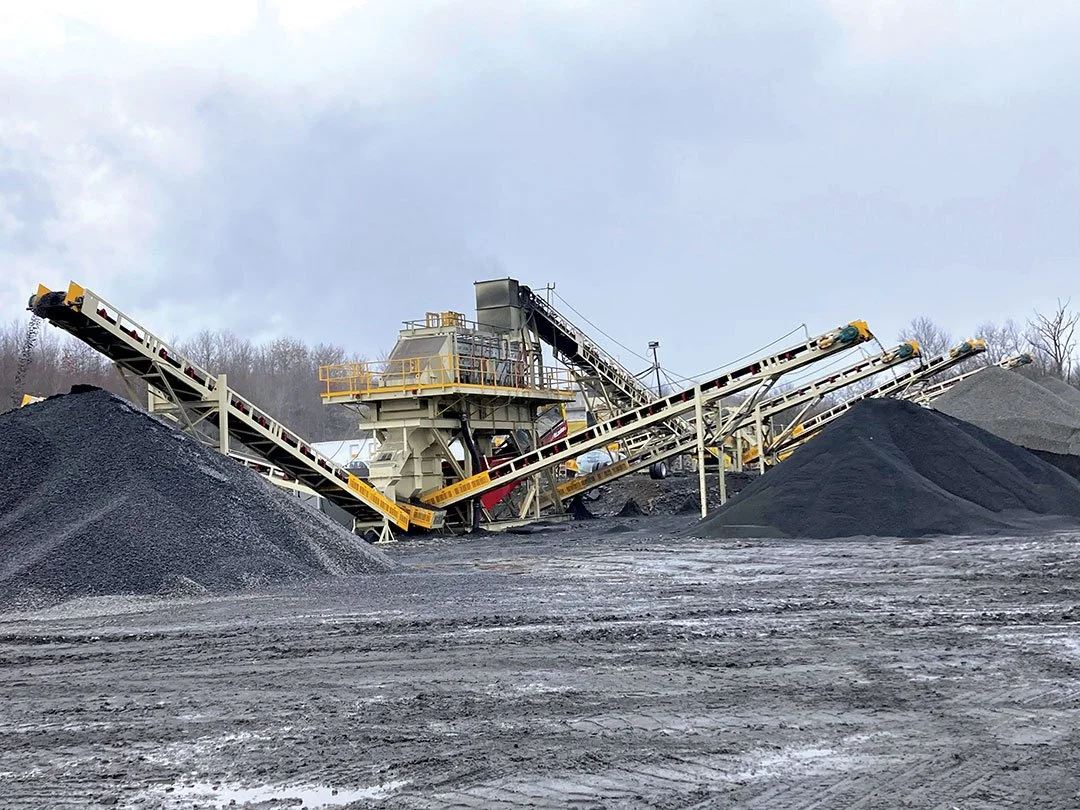
Mellott quarry near Archibald, Pennsylvania.
“The Pennsylvania Turnpike started construction just 29 miles from my grandfather, and he recognized the opportunity to get into the stone business,” says Paul Mellott, Jr., the former chairman of Mellott Company. “He started an aggregate operation in 1936 to provide material for the construction of the Pennsylvania Turnpike.”
In 1939, H.B. acquired a lease on a quarry in Warfordsburg, Pennsylvania, which today—more than eight decades later—is still a working quarry and has become the main business campus for Mellott Company.
Then came 1941—the attack on Pearl Harbor and the United States’ entry into World War II. Construction on the turnpike halted as the focus turned to producing war materials. H.B. again adapted to the business environment and focused on the coal venture, investing in a coal property in Hazelton, Pennsylvania.
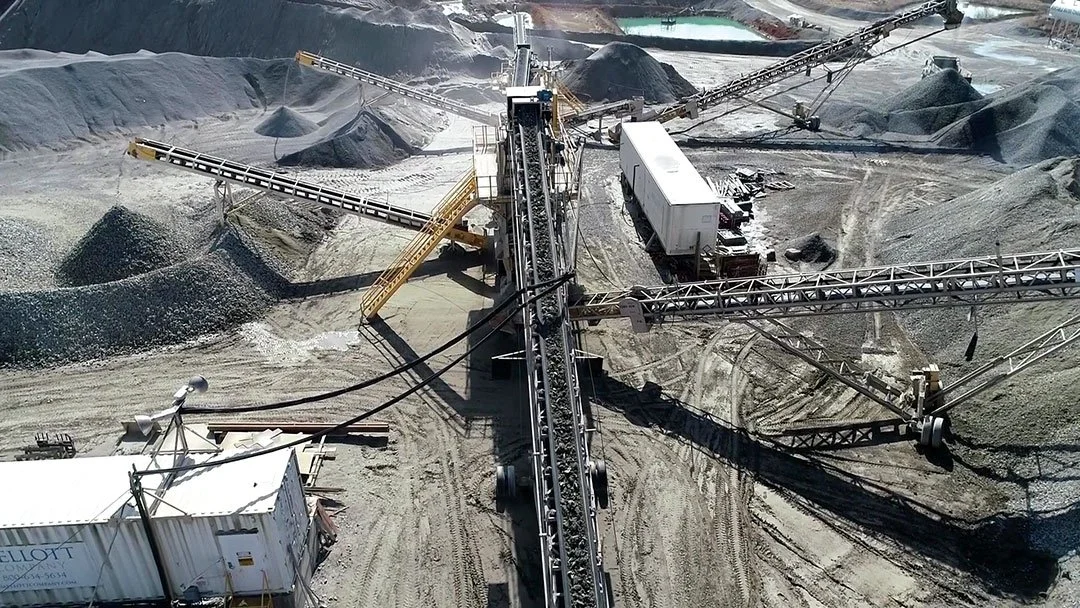
Finished crushed stone being piled in the Mellott quarry.
By the end of the war, H.B. operated two quarries, 13 sawmills, numerous coal mines, and had more than 200 employees on his payroll, including his eldest son, H.B. Jr., a war veteran and recent college graduate.
Then Comes Tragedy
On July 16, 1948, a small plane carrying H.B., a geologist for Mellott and the pilot flew from Bedford, Pennsylvania, to Charleston, West Virginia, to pick up H.B. Jr. On the return flight, shortly after takeoff, the plane ran into a severe thunderstorm and crashed near Newberg, West Virginia. All four aboard were killed.
At a time when the company was seeing great success, the loss of H.B. and his eldest son was compounded by the fact that H.B. didn’t have a will in place, leaving his wife Amy in a tough position.
“Without a will, my dad [Paul Clifford, “P.C.”] and his mother had to find a way to pay the inheritance tax. They had to let go of more than half of their 200 employees and spent the next three years selling equipment,” says Paul, Jr. Fortunately, they were able to keep the two quarries—Warfordsburg and Big Cove Tannery.
“My dad went to college, but after his second year he quit and came home to help my grandmother. At the time, Interstate 70 was being built right next to the Warfordsburg quarry. That was when ready-mixed concrete started to take off, so they installed a ready-mixed plant and hired more people. When Route 81 was being built my dad and uncle [Forrest Mellott] started the contract crushing business. They then got the idea to have people drive the crushed stone to sites and the business started to grow.”
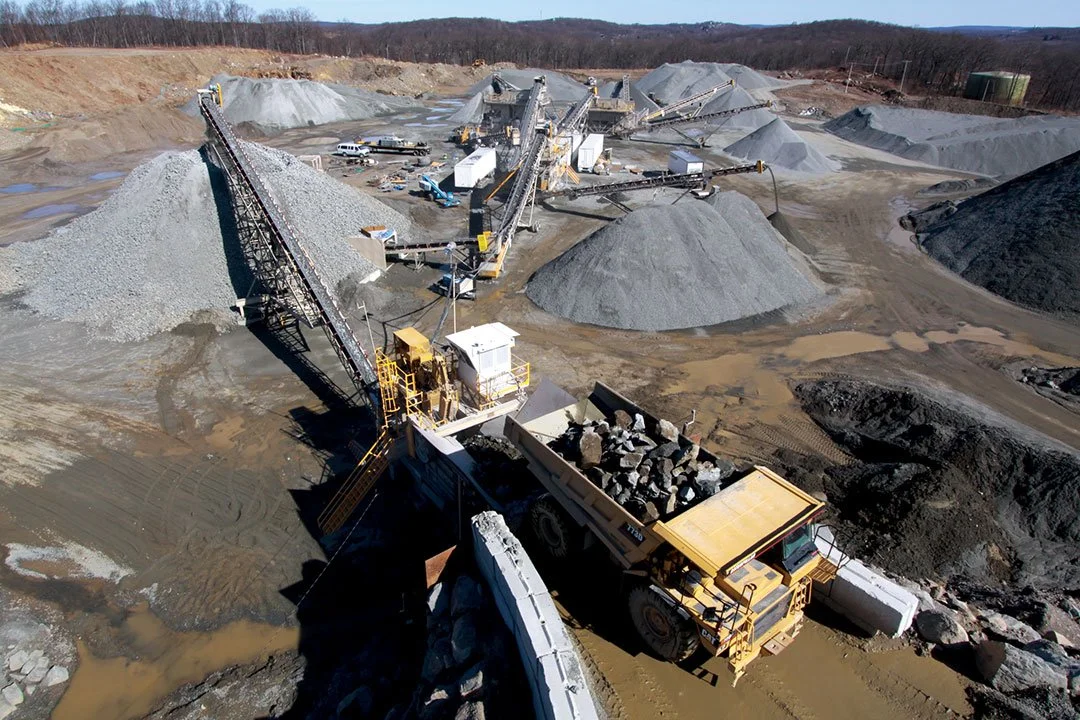
Rock being crushed into stone at a Mellott quarry.
The Next Generation
The Depression, wars, deaths—things kept changing, but the Mellott family pivoted to keep up. P.C. and his brother took a business that had been through so much tribulation and brought it back, turning it into a respectful aggregate companies in the industry, and their sons took up the mantle.
Growing up, Paul Jr. and his brothers, Brian and Herman, always worked for the company.
“I graduated from college in 1974 and went to work full-time at the company,” says Paul, Jr. “As sons of the owner, we had a lot of pressure on us. I was the oldest brother, and everyone expected me to get it right. I learned a lot about people and using values that mom and dad taught me as a kid, and my brothers and I learned all about rock and crushing rock. We spent many, many years in the quarry and learned everything we needed to know.”
“After making crushing equipment for ourselves, we knew we had to build these for other people.” —Paul Mellott, Jr.
Brian agrees. “I spent summers and weekends working in the shop and went full-time as soon as I graduated from Mercersburg Academy.”
Steadily, the family continued to grow the contract crushing business with 22 crushing plants from Indianapolis to Arkansas to Florida to New York and New Jersey. In the 1980s they began making their own conveyors and in 1992 they got into the manufacturing business. By 2007, they expanded the manufacturing and equipment division into Georgia, Tennessee, and Florida.
“After making crushing equipment for ourselves, we knew we had to build these for other people,” says Paul, Jr. “We started building all the parts around the crusher, allowing the crusher to be portable. We got really good engineers and people and became the largest company that does crushing, design, and service.
Today, Mellott employees travel the world to service the equipment, and people from all over the world come to see the Mellott campus that opened in Warfordsburg in 1993.
“The fact that we do so many different aspects of the aggregate business, from selling equipment, building and manufacturing systems, selling parts, contract crushing, and service, means that we are wholeheartedly in the aggregate industry and that is what we support,” says Brian.
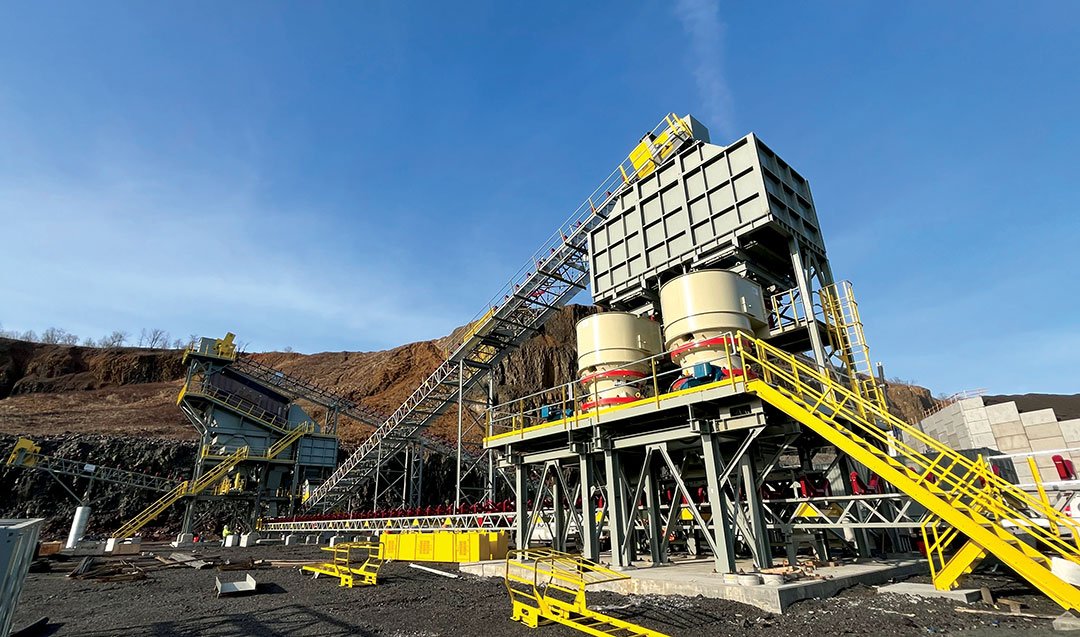
Mellott quarry near Somerville, New Jersey.
Leadership with a Family Feel
Celebrating 106 years is quite an achievement. So how have they balanced a century-old family business while keeping that family culture and maintaining a forward-looking, innovative approach to the industry?
In 2005, Paul Jr. and his brothers recognized that they wouldn’t be around forever, and they wanted to imprint their legacy on the way the business should be identified and operated. So, they got the leadership team together to discuss a leadership style that they believe would have a significant impact on the company.
“When I was 53, I knew that my brothers and I wouldn’t be around forever,” says Paul Jr. “My friend Charlie Luck [president and CEO of Luck Companies] said ‘you need to do a values-based leadership.’ That’s what we did, and it changed everything.”
Value-based leadership is a style that focuses on a set of values specifically identified by the company as a system that the Mellott Family wants to live and work under. The values they live by are safety, integrity, commitment, respect, and excellence. This system guides decision making and is lived out in every aspect of the business.
“The Mellott family is from a Southcentral Pennsylvania farm community—nothing flashy, just hardworking, get-the-job-done, salt-of-the-earth people,” says Jeff Rowland, director of human resources. “Our values culture is important and make us special. But the more important piece is the culture and respect for community and our employees.”
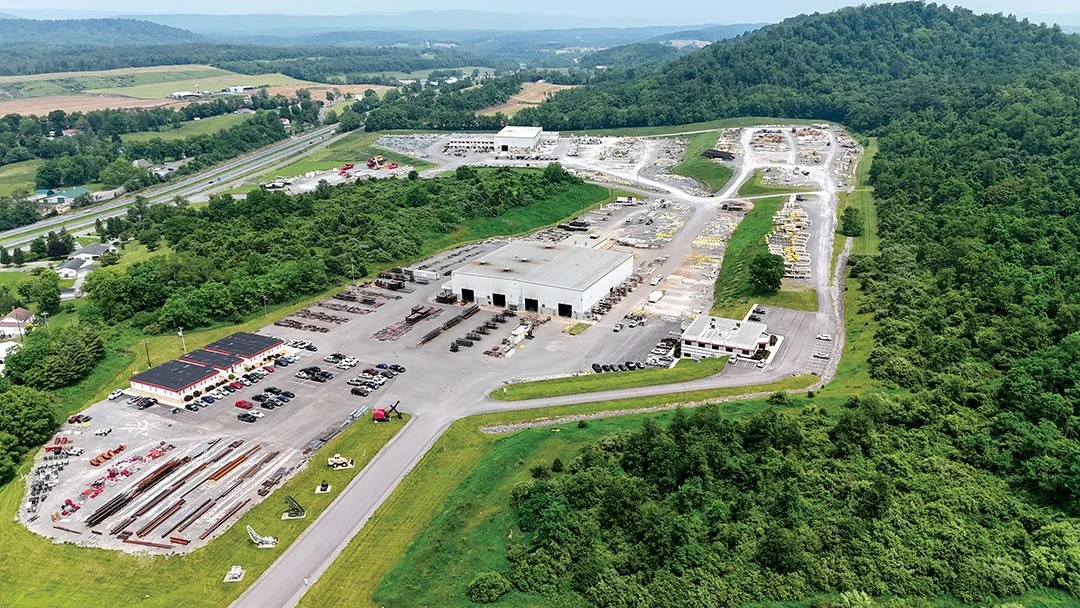
The Mellott Company campus near Warfordsburg, Pennsylvania.
Paying It Forward
From the very beginning, H.B. was supportive of the community that buoyed his success, and that community support didn’t end with him. It continued with his sons, grandsons, and into the current culture of the Mellott Company.
In 1993, during an aggregate association summer board meeting, Paul Jr. heard a talk given by Don Thomey, the general manager at Maryland Materials, Inc., in North East, Maryland, about his efforts to help local schools. Part of this effort included the adoption of a senior class and the process of educating the youth about the aggregate industry.
“During this meeting a lot of people said that I need to adopt a school and get involved,” Paul Jr. recalls. “So, I went back and asked my dad and uncle if I could have the time to do this and they agreed.”
Paul, Jr. went to the superintendent of Southern Fulton High School and asked how the Mellott Company could get involved with the school to help inform students that their education was really important. That’s when he started his lecture series.
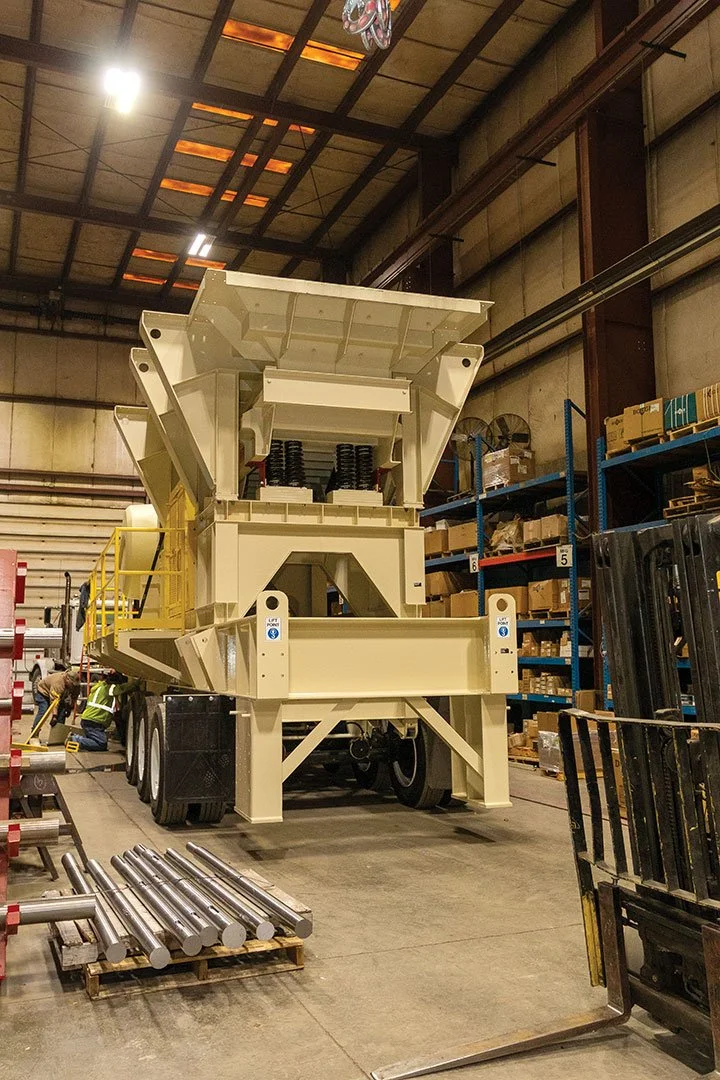
Equipment manufactured at Mellott Company’s main campus.
“Every two weeks, from 1993 to 2000, I would invite friends from our industry, K-9 policemen with dogs, nurses, and medical people who would tell the eighth graders about the value of school, studying, and listening,” says Paul, Jr. “In 2000, some of our employees would come talk, and in 2002 we started doing mock interviews with students.”
Through the years, this program has expanded to include not only mock job interviews, but also field trips to places like Antietam Battlefield, the U.S. Capitol, and the Smithsonian Institute, a senior class project designed around the Mellott Company values, and scholarships that are awarded annually.
“We’ve talked to schools all over this area and those near our quarries,” says Paul, Jr. “I was recently at Southern Fulton High School, and a teacher asked if I would like to eat lunch with the seventh graders. She said, ‘it’s the best meal of the year; Thanksgiving dinner.’ The students were so excited, and they were all around me asking questions. They just love having someone come in from outside and take interest in them.”
The family’s generosity doesn’t end in Fulton County. Other communities and organizations have benefitted, including initiatives at Hagerstown Community College, the donation of crushed stone to help build a roadway and parking lot at the Hagerstown YMCA, help in building the Hagerstown Soccer Complex, and the donation of equipment to help build two Little League ballfields at Kirkwood Park outside Hancock.
The Washington County connection stems back to when the company owned quarries and concrete plants—Beaver Creek and Rockdale—on the east and west sides of Hagerstown. In addition, Paul Jr., Brian, and Herman all live in the area and have had considerable involvement with Fountain Head Country Club just north of Hagerstown. In fact, Paul, Jr. is the club historian for the 102-year-old establishment.
“We’ve always been asked to support different communities, and we always try to help,” says Brian. “It’s about helping young kids before they’re out of high school, so they get a real job interview and learn real life skills. It’s about helping individuals improve themselves.”
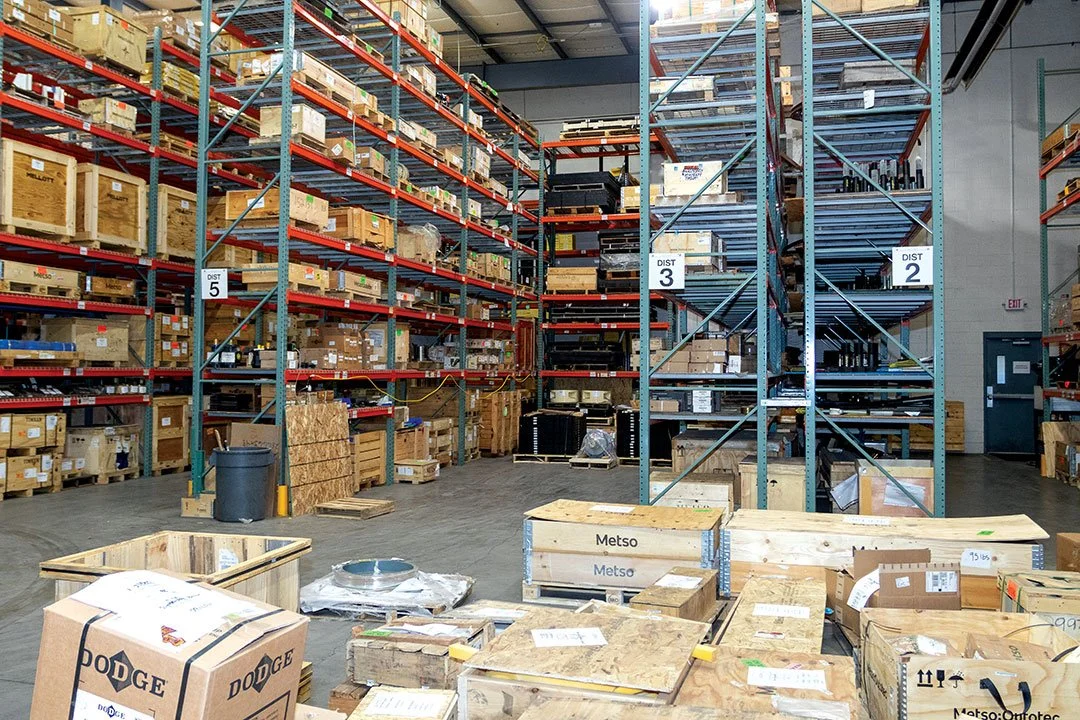
The Mellott parts warehouse.
The Future of Mellott Company
While the Mellott family has a long history of community service and a strong foundation in caring for their employees, they didn’t just stop there. In 2016, Mellott University was created to address a critical shortage of technically skilled workers in the aggregate industry. It has become an investment in the future of Mellott Company and the industry as a whole.
“We hire local high school students, one of which is Hagerstown, and they go through two semesters, fall and spring,” says Rowland. “They’re still in high school, but they come to us from 1 p.m. to 5 p.m. We do two hours of training in the classroom where they learn about the industry, Mellott Company, and safety and then two hours of hands-on training. They are paid for this time, and at the end of the second semester they are offered a full-time job in service, crushing, fabrication, welding, or mechanics.
“We have a true curriculum led by an industrial tech program director from HCC,” Rowland says. “These kids come to us with a certain set of skills and a strong interest, are paid to attend while still in high school, receive college credit from Blue Ridge Community, and then are offered a full-time position. This is an incredible start to a young person’s career.”
“We’ve always been asked to support different communities, and we always try to help.” —Brian Mellott
There are generally six to 10 students per year. “We try to adjust based on our needs so we can offer placement at the end,” says Rowland, who also admits that the real struggle is to get young people who want to stay. “Some have other interests, lives, etc. They’re young and open to anything, so it’s a challenge to keep them. But we do have a few who have stayed long term.”
Evidence of this came in 2024 when nine of the 10 students stayed to work at Mellott Company.
“Mellott University is the future of our company and the industry,” says Paul, Jr. “We have service techs who don’t want to travel anymore, but the young kids coming up are eager to travel—they want to get out of Warfordsburg.
“Everything in our company is designed to think about the future. You have to commit to a long-term perspective—that’s what we’re all about. Our employees are the most important asset. If you get people who want to work for a company; who want to be here and feel part of the family, then they want to stay.”
The Mellott Company currently has 360 employees working throughout all their locations. “This is the most we’ve ever had in our 106-year history,” says Rowland. “I expect we’ll be at 400 before long.”