For the Love of the Game
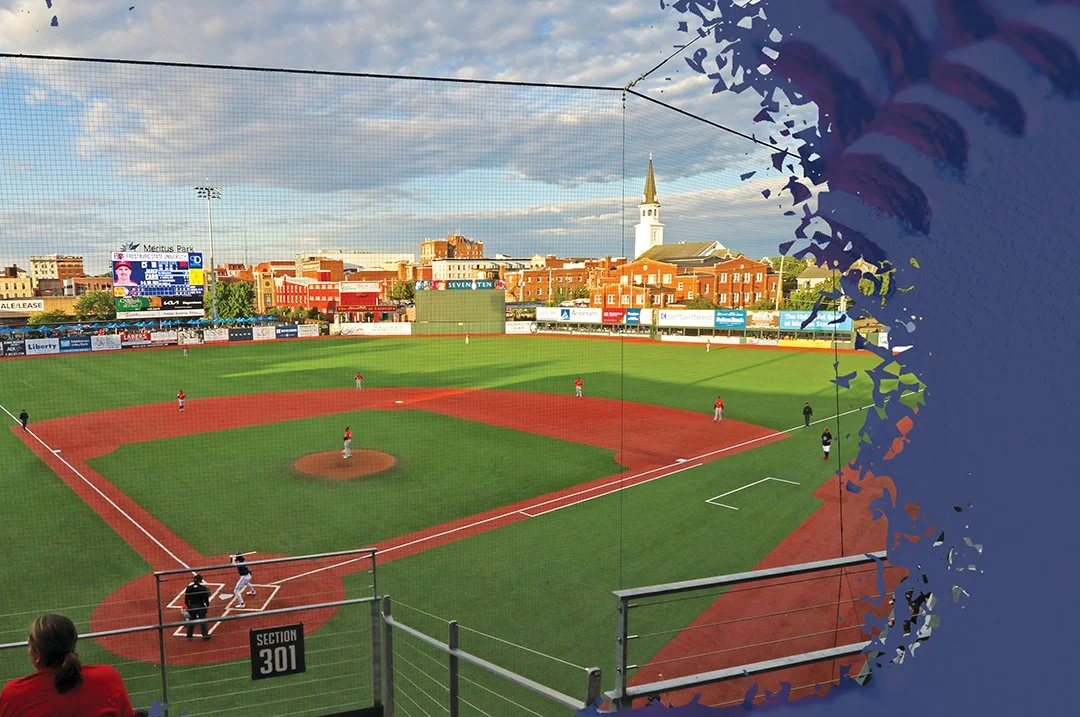
Meritus Park and the Hagerstown skyline at dusk.
The boys of summer in Hagerstown appreciate the life—and share the dreams—in a lower level of professional baseball
By Bill Kamenjar
As the tiring Friday evening in May gradually withdrew from sunny skies to rays of artificial stadium lighting, enduring firework fanatics (mostly youngsters) anxiously awaited their favorite outfield attraction.
But well before the bangs, booms, and pops of the colorful starbursts filled the air above Meritus Stadium, baseball players from a wide variety of backgrounds, each one sharing a similar dream, were showcasing their skills on the field in front of those same kids and the more sophisticated local baseball fans in the stadium.
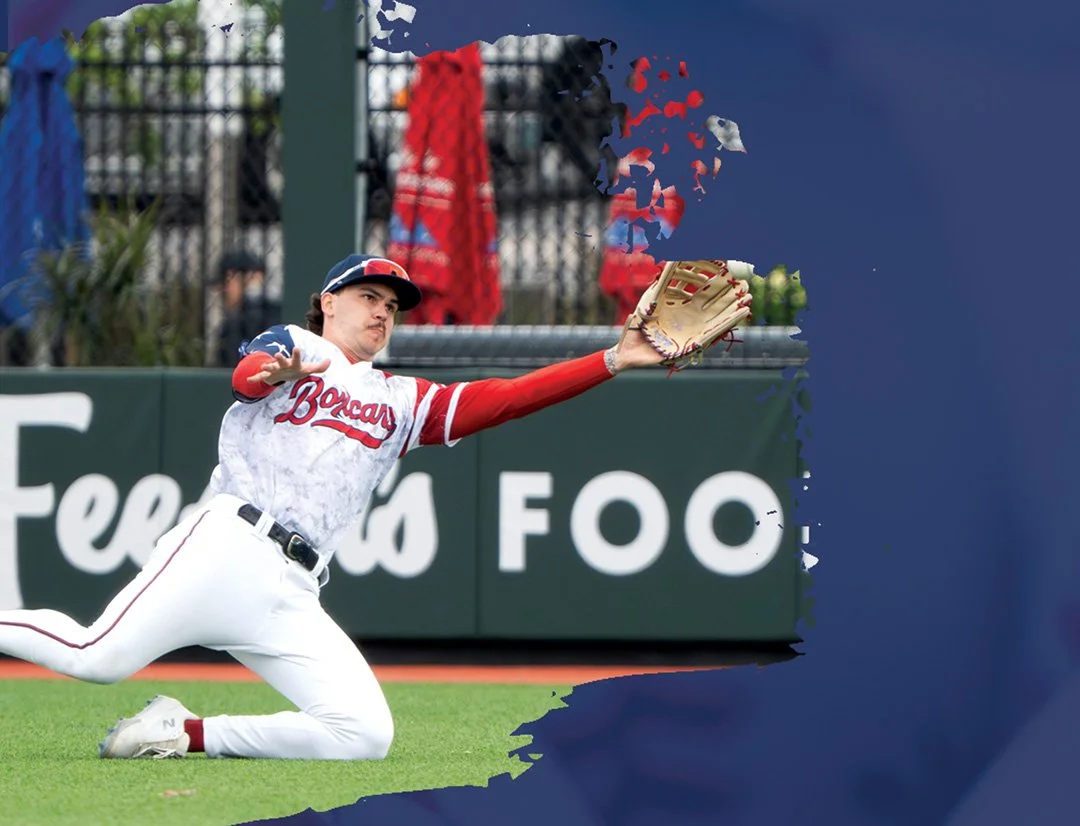
Boxcars’ outfielder Jared Carr went to the Saint James School.
It was yet another great evening for Hagerstown’s devoted fans to support the Flying Boxcars, a team of young men all harboring the dream of reaching—or returning—to Major League Baseball. Although popular fiction and movies have portrayed the minor league game as being somewhat of a grind—with long-haul bus rides, shabby hotels, unhealthy eating and drinking habits, and low pay—after speaking with players representing Hagerstown in Flying Boxcars uniforms this season, the life of an independent leaguer suggests that things are actually more similar than distant to those at the game’s highest level.
So along with the dissolution of many of professional baseball’s lower-level stereotypes comes a change in its participants’ attitudes. Players, some into their 40s, want to keep on playing for the love of the game, even though their physical skills have begun to recede or never quite developed to the level required of big leagues. Even Vincent Towns, a 53-year-old knuckleball pitcher from Suitland, Maryland, is keeping the dream alive in Hagerstown.
For the Boxcars players, the lower level of professional baseball isn’t quite such a struggle in the state-of-the-art Meritus Park.
“Guys like playing here, for sure,” David Blenckstone, the Flying Boxcars general manager. “This is the A-plus ballpark in the (Atlantic) league. We have a great atmosphere and even the fan experience is unique. This is a really great baseball town, from the youth leagues all the way up to the community college level [Hagerstown CC]. To have brought it [professional baseball] back into this facility is huge.”
The park’s positioning in the western cityscape overlooking downtown makes the nearly 4,000-seat Meritus Park an attraction in itself. “I don’t think anybody knew Hagerstown had a skyline until they built this ballpark,” Blenckstone joked, staring out over downtown from his perch in the upper-level press box.
The luxurious, modern setting aside, that’s not how it has always been in Hagerstown. For years, the former Hagerstown Suns played with various Major League affiliations in the antiquated Municipal Stadium, which opened in 1930.
“I played for the Suns in 2015,” says Boxcars’ infielder Ossie Abreu. “As for the difference, I mean, we’ve got a great city. And we’ve got one of the best facilities right now. It’s a big difference between here and there.”
Although the way the game is enjoyed by fans and the lifestyles of the players has greatly improved, it’s still professional baseball at the non-Major League level. As Boxcars’ outfielder Marty Costes, a Baltimore native and former Maryland Terrapin, put it, “It’s the same game. Baseball hasn’t really changed.”
Local Boy Comes Home
In the minor leagues, a player rarely gets the chance to play at home. But remarkably, one Hagerstown player is actually playing near his old stomping grounds. Jared Carr hails from Martinsburg, West Virginia, and played high school baseball at the Saint James School in Hagerstown. He has the luxury of living with his parents and commuting about 20 minutes to home games.
“It’s a little weird to be at home playing professional baseball considering I have been all over the place the past couple years,” says Carr, who played college baseball at nearby Shepherd University. “But it’s definitely nice. I like it. I was in Mexico this past winter and summer, and I played a year in Charleston, West Virginia.”
So for now, he can’t think of anything better than roaming the outfield in Hagerstown.
“We are pretty fortunate here,” he says. “We’ve definitely got the nicest stadium and best facilities in terms of locker rooms and stuff like that, and we get a good crowd. You don’t see that in too many places elsewhere in this league. It’s definitely No. 1.”
Still, getting out of town once in a while is certainly not frowned upon. The team’s bus trips at the longest are eight hours and average around three to four.
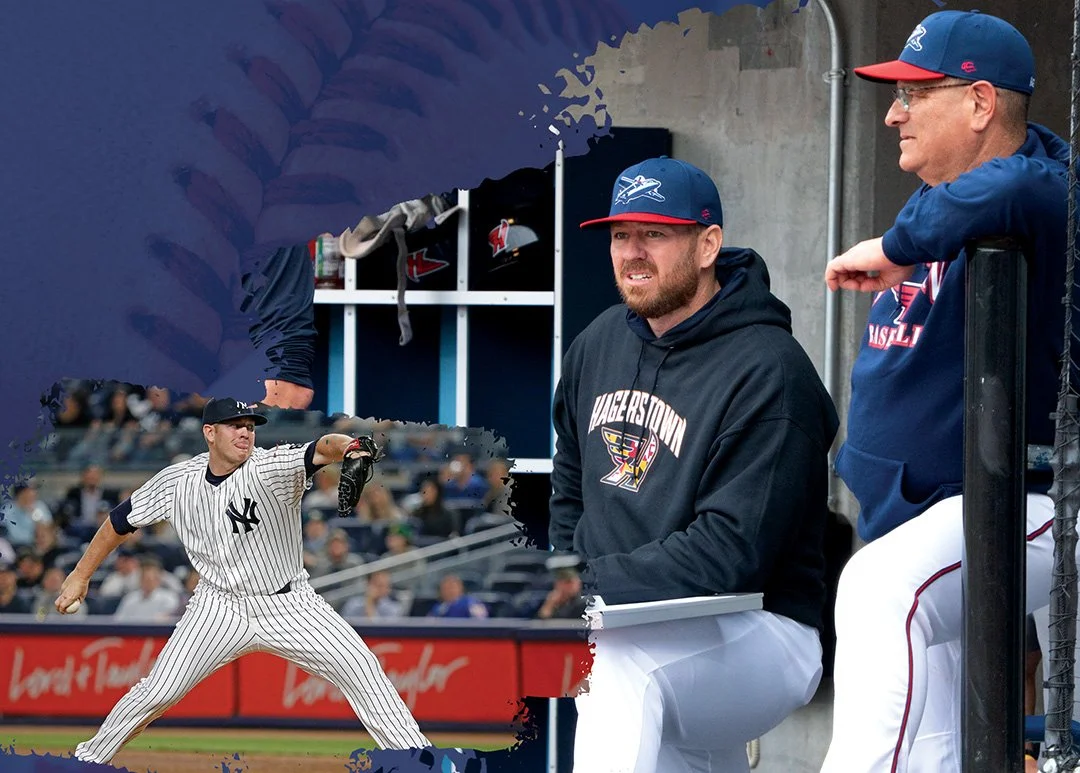
Former New York Yankees pitcher Johnny Barbato now coaches and pitches in Hagerstown.
“Fortunately, most of the trips aren’t terribly far, so it’s not too bad,” he says.
As for his hopes and dreams for moving on back up the professional baseball ladder, Carr said he takes it day by day.
“For me, it’s all about playing and having fun,” he says. “As long as you can do that in some capacity, anywhere you go feels like you are making progress towards that goal. Whether it’s making the Major Leagues or trying to find another place to play, whether it’s Mexico or going overseas. Whatever, it’s just all about whether you are enjoying it.”
Carr’s situation is highly unusual. His teammates are either sharing apartments or living with host families.
Carr doesn’t need to expend the energy needed to live on his own, so he uses all his resources to learn more about himself and the game.
“There are different things you can try to find within yourself and work with coaches to fix,” he says. “But as far as my career has progressed, and as I’ve gotten older, it’s more about how to fix things on your own. Coaches are vital to the game, and I would never want to take anything away from them. But at the end of the day, I am the one out on the field so I have to be able to make those micro adjustments myself, and being able to figure that on my own helps me a lot.”
The Wizard of Ossie
Perhaps no one player knows the ins and outs of the Hagerstown community better than Ossie Abreu, who has played in Hagerstown for all three of the Boxcars’ seasons and played one year with the Suns. He and his family settled in Maugansville more than six years ago. He’s a fixture in town and kids who see him around often recognize him.
“I feel very comfortable when I am at home. I think the fans make this place attractive,” he says. “They love to come here. They enjoy the game, and I think they support when we go though bad times or good. They are still there.”
Abreu, who has also played in the Washington Nationals and Arizona Diamondbacks organizations and advanced as far as Double A, has an added advantage for life on the road.
“My wife cooks meals for me before I go to the road,” he says. “I like homemade, so I don’t really go to restaurants. I bring it all with me. She cooks all the meals the night before, I freeze them, then I put them in a cooler and bring them with me. It saves money, too. She cooks them, then later I put them in the microwave and in five minutes, enjoy.”
When not playing for the Flying Boxcars during the home team’s season, Abreu jets off for faraway lands to continue in his craft and collect other paychecks. But he always returns ‘home’ to Hagerstown.
“I play winter ball, then for a couple months before the season starts, I do lessons,” he says. “I can go anywhere, Dominican Republic, Nicaragua, Columbia. These are professional leagues. That’s what I do. I leave the family for a couple months. It’s hard, it’s tough, but that’s my job, you know.”
He enjoys working with local youth baseball players, often relating his experiences and spread useful advice to the up-and-comers.
“I say to the kids just work hard, be disciplined, and dream what you want to be,” he says. “Believe in yourself. Just work hard, and it will pay off. Baseball is all the time. I don’t get tired of it. I love baseball. If you love it, you won’t get tired of it.”
The Player/Coach
Miami, Florida, native Johnny Barbato is a right-handed pitcher…but he works both sides of the mound these days. The former major leaguer came to Hagerstown from a different world than what he experienced in venues like PNC Park in Pittsburgh and Yankee Stadium in New York City.
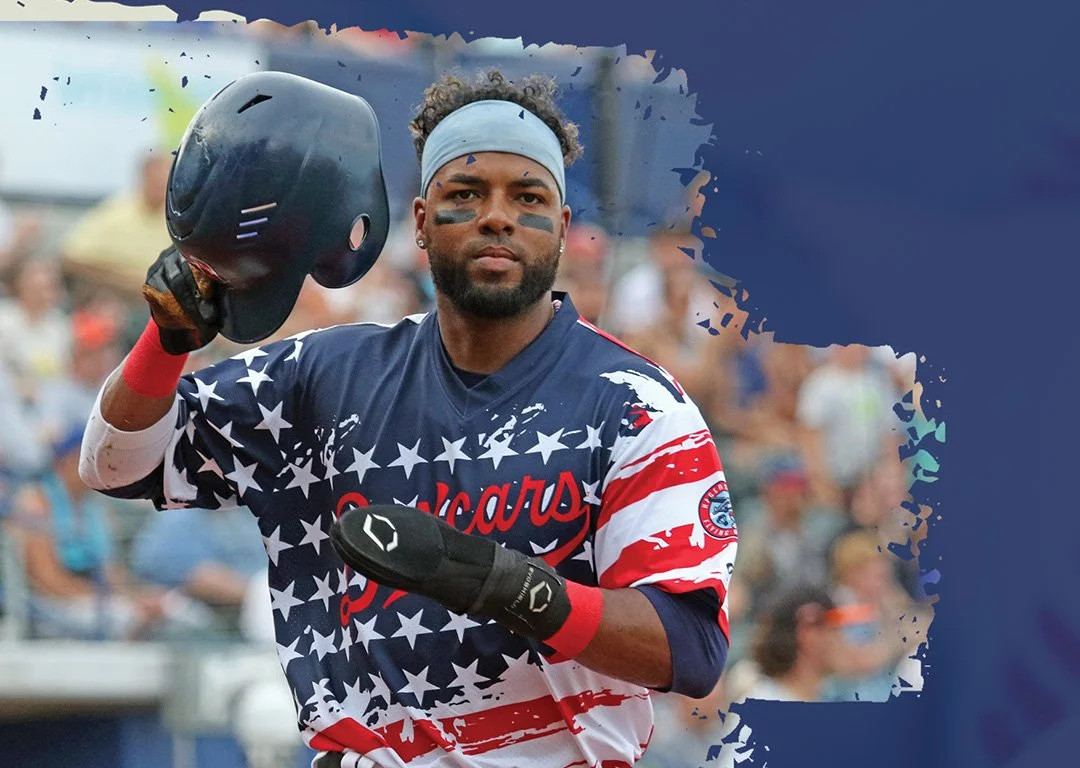
Infielder Ossie Abreu.
“This is my 16th year in professional baseball,” he says. “I’ve seen a little bit, yeah, yeah. The last four years or so I’ve been on the coaching side. Last year, long story, but I ended up throwing a live batting practice to a couple of our hitters on the team I was coaching. As a joke, I sent a video to my agent saying, ‘Hey, I still got it.’ The next thing you know, I’m in Mexico playing. So, it’s all good. This year, when I talked to [Flying Boxcars manager] Mark [Minicozzi] about coming here to be a coach, I asked him if I could throw some innings. That’s how the player/coach thing came about.”
Having made it to the majors with three different franchises, Barbato has plenty to offer across the board.
“Honestly, that’s the reason why I love coaching at this level because a lot of these guys have never been to the highest level of baseball or are trying to work their way back,” he says. “To live out the dream that I was lucky enough to live out, it’s something I try to show these guys. Also, when I see these guys go on to the next level, it’s a really good feeling. Seeing them trying to live out their dream. Like I said, I was lucky enough to do that myself.”
And in doing so, Barbato has become well versed in the differences across all the levels.
“Well, you get to fly if you are in the big leagues and the stadiums and the facilities are going to be better obviously,” he says. “Talentwise? Man, there’s just lot of guys here I think can pitch at the big league level, but it all comes down to consistency and being able to get the shot. I think a lot of these guys here are kinda slept on and especially on our staff there are some guys who have big-league stuff. It’s just kinda honing it in and getting to where they can be consistent on a daily basis.”
Growing up, Barbato says he tried to play every position or as many positions as possible before settling down on what he was best at, pitching.
“Nowadays it’s a lot different,” he says. “Kids coming in are now only pitchers at 10 or 12 years old and that was never a thing. For me, pitching was almost secondary because I always played other positions. I always had a good arm and stuff then you realize once you get to the high school level, ‘Alright, well, I am a little better pitcher than I am infielder.’ Then you kinda stick to that position.”
But in the end, Barbato says the natural attraction to the long ball seems to rule the roost.
“Let’s be honest, when you are a kid, you notice home runs and hitters and stuff like that and you want to be like them,” he says. “No one ever says to their kid they should want to be like a [Hall of Famers] Roger Clemens or Randy Johnson. The game revolves around the offense. People come to see the homers, not many people come to see a pitchers’ duel anymore.”
Still, there are enough arms out there and plenty of money to be made if a pitcher happens to make it to the “show.” For Barbato, those are the ones who keep him motivated to coach.
“It’s been a great experience, and I’ve been fortunate enough to say that I’ve been at the top level. I mean you can’t really beat the Yankees organization. I wouldn’t change it for anything.”
Fear the Turtle
Hailing from Baltimore and being a former Terrapin, outfielder Marty Costes, perhaps, holds the deepest appreciation for the rebirth of professional baseball in Hagerstown.
“This is good for the state. It brings a sense of pride, and it also brings sort of a Triple A or Double A feel along with it,” he says. “I’m grateful to be here. I played with the Houston Astros all the way up to the Triple A level, so I’ve played in many different cities. I played in Fayetteville when they first opened their stadium. And I played with the Miami Marlins for a year in Jacksonville. And then I played last year with the York team in this league. So, coming home to this league is just a beautiful way to bring a winning culture, to bring more fans out. So, it’s been great.”
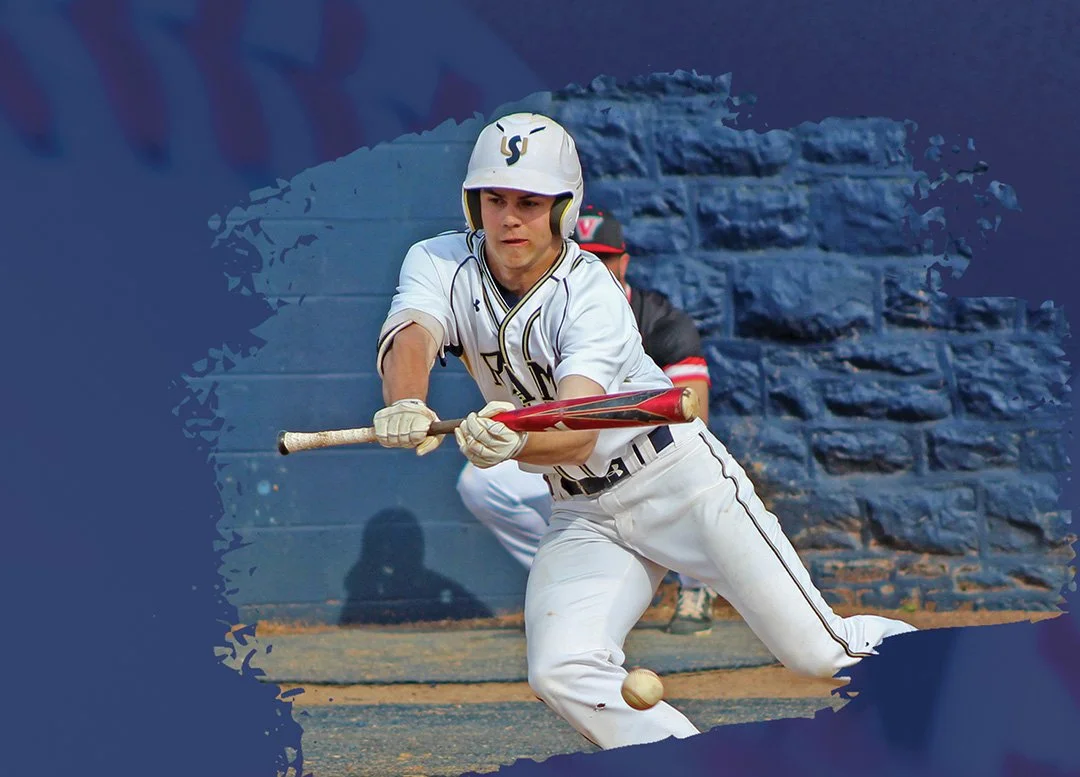
Local boy Jared Carr in action at Shepherd University during his college days.
Being a big buffet guy with a passion for seafood having grown up near the Chesapeake Bay, Costes prefers a well-known Chinese buffet in downtown Hagerstown over other options. During the off season he also works with an academy in Washington, D.C., to help promote the game, mainly giving hitting lessons.
“For the little guys, I tell them, one, it’s about confidence. Two, I just try to have them work off the tee and keep it simple,” he says. “Simplicity is the highest form of sophistication. In baseball, you have to learn to think ahead. You have to learn to focus. That’s all it is, learning to focus.”
The biggest difference he sees in his experience at Hagerstown, once again, is its amenities.
“This is a new stadium. That’s a lot of the difference right there,” he says. “I loved the team when I played in York. We won a lot of games. But here, the cages and other facilities are top of the line.”
Though when the ‘boys on the bus’ (as minor leaguers are sometimes called) gathered on that Friday night for both fireworks against the visiting Ducks of Long Island and the late-night light show in the outfield of Meritus Park afterwards, Costes was sidelined with a sore ankle.
“I should be back in the lineup pretty soon,” he said, adding that advancements have truly upped his game and his recovery time. “Technology has become more helpful. I look back when I first got into pro ball, I didn’t know how to break down my own film. So, it’s like me learning how to use the resources better.”
With that, is Costes—or any of these players really—ready to give up the professional baseball lifestyle highly coveted in Hagerstown at the age of 30?
“Nah, I want to play ball until I’m 40 at least. That’s how I see it.”