Works of Scandinavian Art
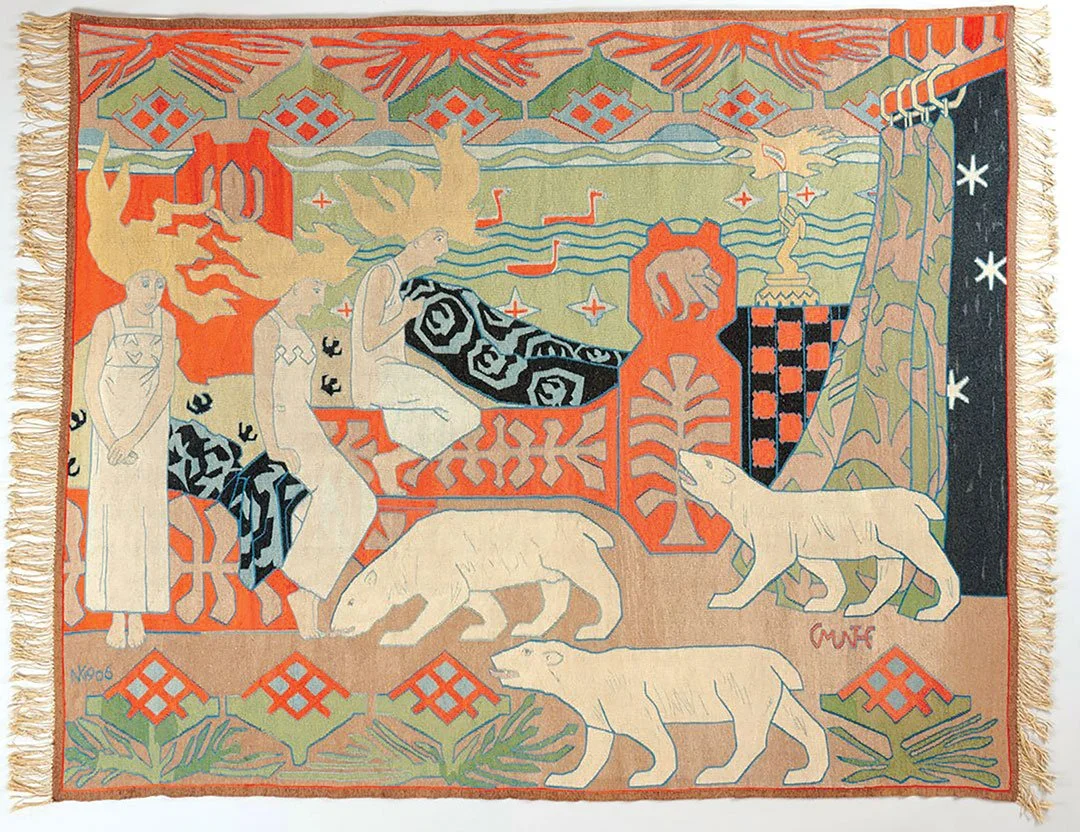
A 1906 wool and linen tapestry by Gerhard Munthe (Norwegian, 1849-1929) The Suitors, 1906.
The second North American presentation examining how Nordic artists celebrated the concept of home, national identity, and personal expression is on view until May 17 at the Washington County Museum of Fine Arts.
The exhibition, first shown at The Frick Pittsburgh Museum, features work drawn from the private collection of Dr. David and Susan Werner as well as the public collections to which they have donated works. Paintings, textiles, ceramics, furniture, silver, and other decorative arts illuminate the region’s commitment to individual creativity, local craftsmanship, and national pride.
A central unifying metaphor for the exhibition is a concept of home that encompasses not only an individual’s household, but their hometown and homeland—an expansive definition that includes the communities that influence individual development, reflecting a larger vision of social and cultural identity.
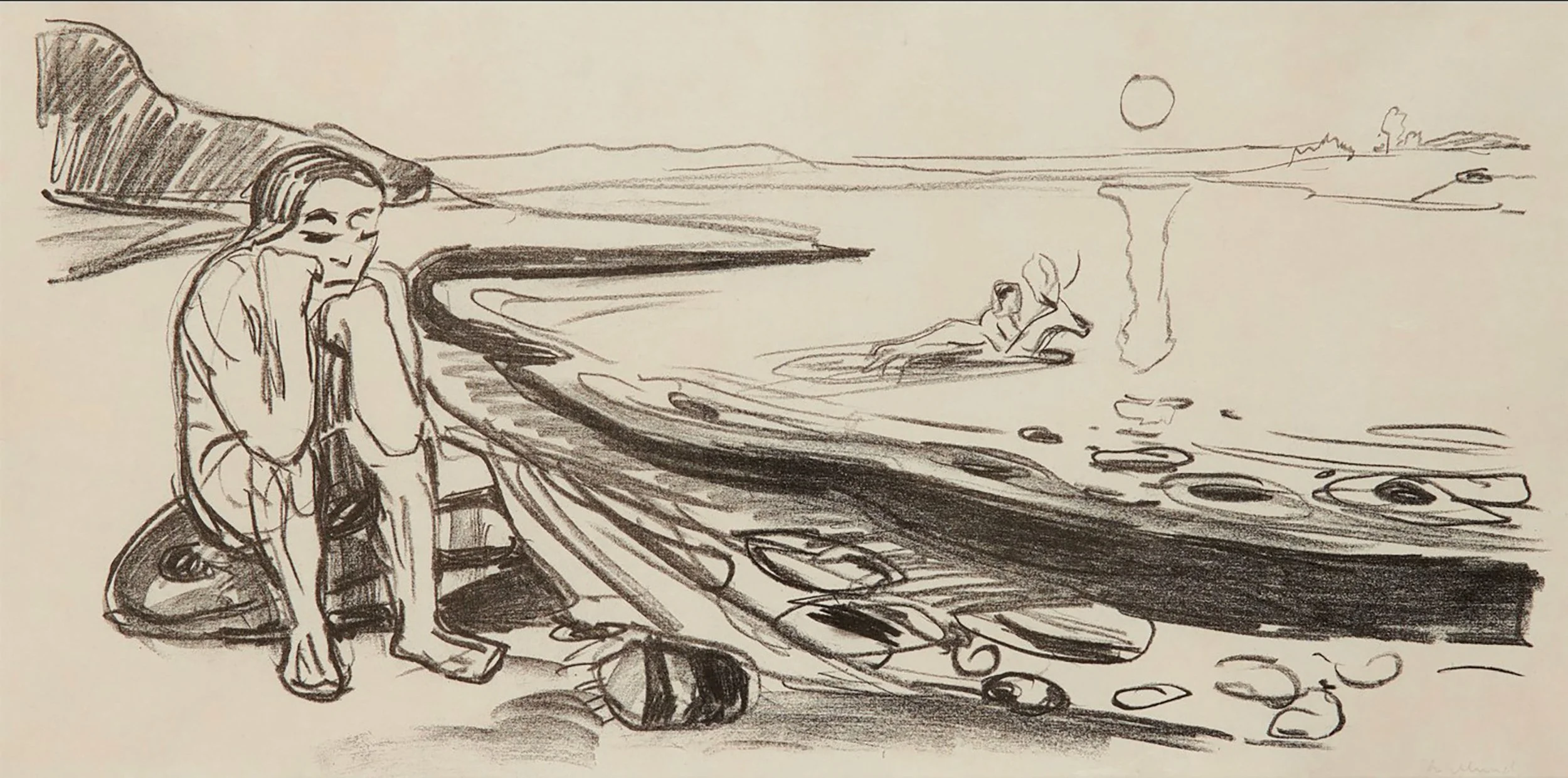
A lithograph work by Edvard Munch (Norwegian, 1863–1944) Omega’s Flight, 1908-1909.
In Scandinavian countries around the turn of the 20th century, artists and artisans began rejecting the formulaic instruction in favor of personal expression, integrating local landscapes, folk tales, and mythological motifs into their work. Artistic practices flourished across social classes, exemplified by rural families who created decorative furniture, textiles, and household objects.
As in many areas impacted by the growth of cities and the industrial revolution, particular craft traditions became a source of national pride. Reform movements and organizations mobilized women to preserve and elevate these traditions, reinforcing a sense of shared cultural heritage and social responsibility.
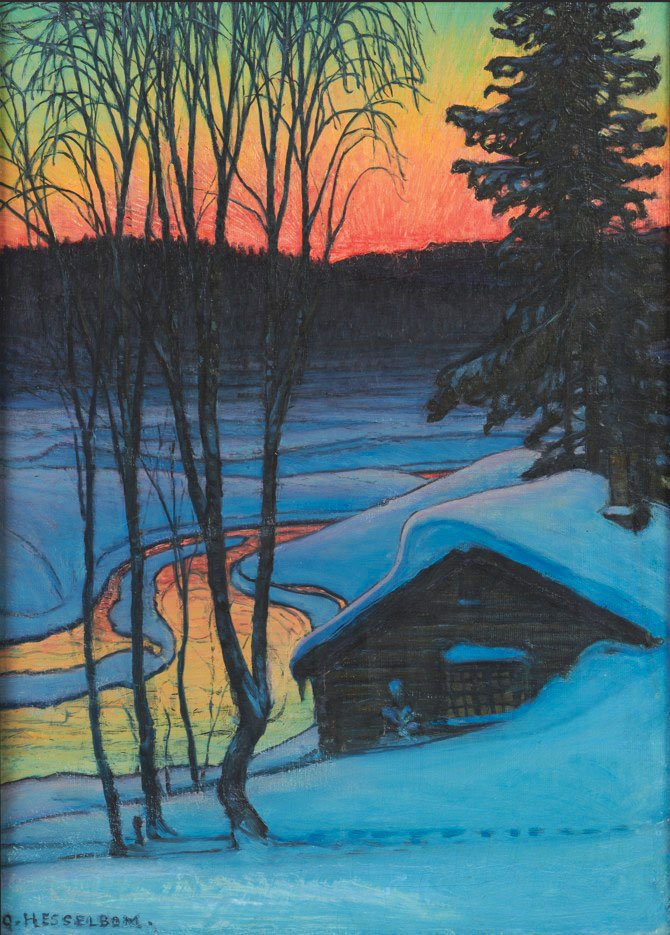
The oil on canvas work of Otto Hesselbom (Swedish, 1848–1913) Sunset in Varmland, c. 1900.
The exhibition takes on particular significance in Hagerstown because museum founders, artist William Henry Singer, Jr. and his wife, Anna Brugh Singer, built a home in Olden, Norway. His deep connection to the dramatic Norwegian landscape was expressed in many of his paintings featuring snowcapped mountains, rushing rivers, and villages tucked into snowy drifts.
The Hagerstown presentation will be supplemented with works from the museum’s collection, including examples of Swedish glass and etchings by internationally acclaimed Swedish artist Anders Zorn (1860-1920).
“This is a rich and fascinating exhibition that dovetails beautifully with the story of our founders and their attraction to life in Norway,” says executive director Sarah Hall. “I had the pleasure of seeing much of this collection in the Werners’ home some years ago, and I am absolutely delighted that we are able to bring these works and the story they tell to Hagerstown.”
The exhibition includes more than 80 objects and is organized into thematic sections: Norwegian Revival, An Artist’s Home/Art Nouveau, Vitalism in Finland and Denmark, Symbolist Experimentation, Rural Craft Traditions, Interiors, and History of Landscape.
The entry gallery immerses visitors in the Norwegian Rival—with works inspired by medieval history and folk traditions. The tapestries of Gerhard Munthe (Norwegian, 1849-1929) and the furniture of Lars Kinsarvik (Norwegian, 1846-1925) embody a tradition populated by princesses, trolls, dragons, and magic.
On display is Munthe’s work The Suitors, which depicts a fairytale of Munthe’s own invention in which three young men, transformed into polar bears, enter the chambers of the daughters of the Northern Lights to court them. The tapestries garnered international attention at the 1900 Paris World’s Fair, as did Kinsarvik’s furniture, which uses colors derived from regional peasant decoration, which is also on display.
“The exhibition offers a rare opportunity to see Scandinavian art in dialogue with the local history of our museum,” says Linda Johnson, Agnita M. Stine Schreiber curator at the museum. “Visitors can explore how international developments in Nordic art connect to our museum’s founders and their deep engagement with Norway’s landscape and culture.”