A Century in the Spotlight
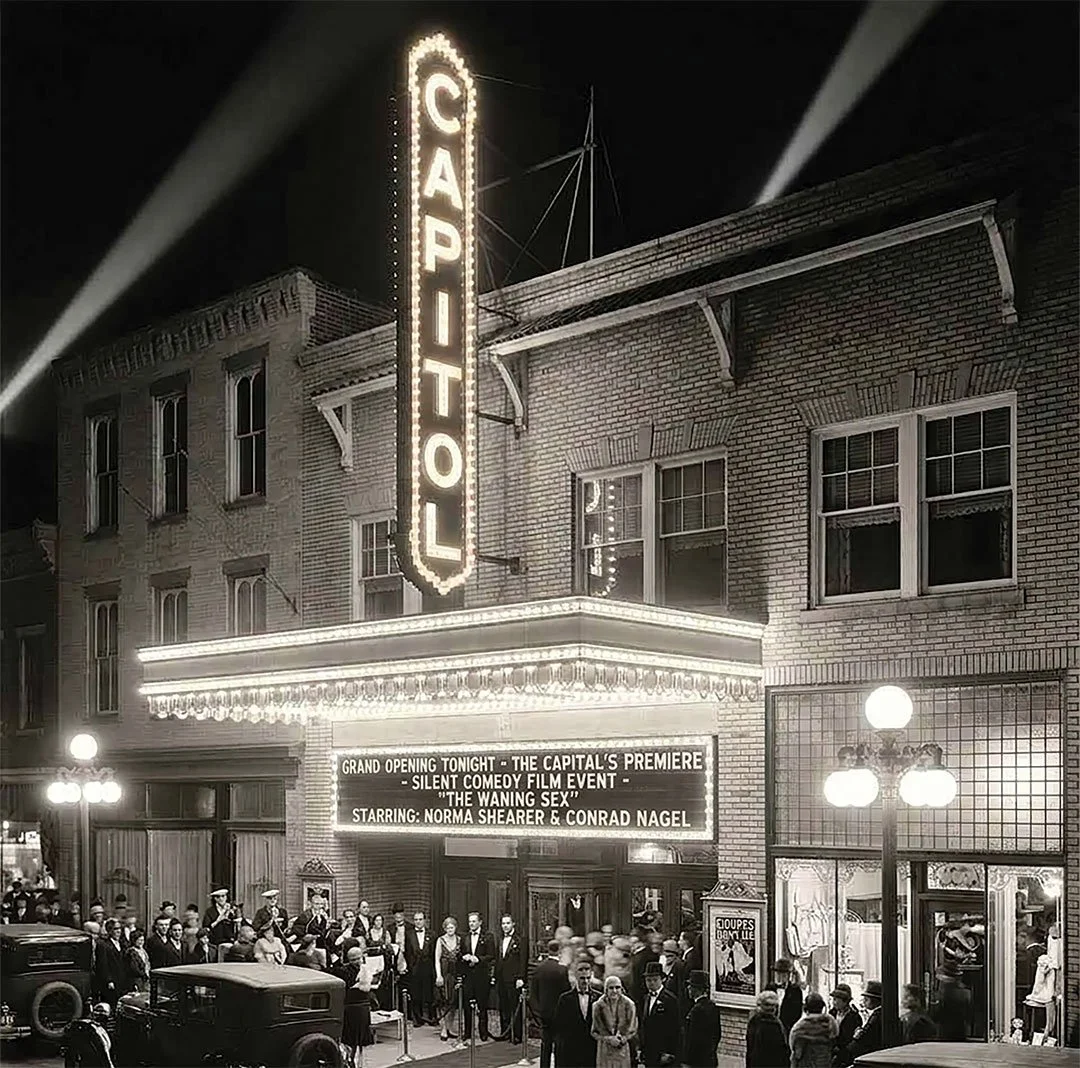
An artist’s rendering of how the Capitol Theatre might have looked on opening night in 1927.
Down the center of South Main Street, the neon glow of the Capitol Theatre Center has cut through the Pennsylvania dusk like a beacon for nearly a century. In an era where historic American movie palaces are routinely repurposed for other businesses or rental units, this downtown anchor stands as a vibrant exception as it turns 100 years old in February.
The Capitol Theatre began on February 3, 1927, when patrons filed past the box office to watch Norma Shearer in “The Waning Sex.” Built by the Pottstown Theatre Company at a then-staggering cost of $185,000—well over $2 million in today’s economy—the venue was designed as a temple of escapism. Master decorator Joseph Gibelli draped the interior in the romantic, ornate flourishes of the Italian Renaissance.
Stepping under the high, colorful ceiling and looking up at the elaborate chandelier, patrons were transported far beyond the rolling farmland of Franklin County. Heavy luxurious fabrics flanked the screen, elegant mahogany railings guided moviegoers to the balcony and detailed fretwork adorned every corner. It was a sensory playground, anchored in the orchestra pit by a crown jewel: the original Möller theater pipe organ. Installed in 1926, it remains one of the few original instruments in the United States still operating in its birth theater today.
The secret to the Capitol’s century of survival is its restless capacity for reinvention. When silent cinema gave way to talkies, the theater evolved. When the rise of home television threatened to empty its 852 seats, it quickly pivoted into a performing arts center in 1948.
The venue also reflected the complex social history of the era. During the mid-20th century, the Capitol was segregated. Black patrons were required to enter through a separate, dark stairwell to reach the balcony while white patrons sat on the main floor. This practice eventually ended, opening the entire auditorium to unassigned seating for all members of the community.
By the late 20th century, structural decline was taking its toll on the historic building. Recognizing the venue’s irreplaceable soul, Downtown Chambersburg Inc. stepped in to purchase the property in 1996. A meticulous seven-year, multi-million-dollar renovation project transformed the historic footprint into the expanded Capitol Theatre Center by 2003. The stage was dramatically extended, a hydraulic lift was added to raise the mighty Möller organ from the pit and the second floor welcomed the Wood Center Stage Theatre—a multi-purpose space that now hosts everything from corporate mixers to intimate weddings. More recently, state-funded infrastructure grants were awarded to protect its foundation.
Today, the nonprofit hub feels as vital as it did during the Roaring ‘20s. It acts as a vibrant cultural shelter for its resident arts companies, including the Chambersburg Community Theatre and the Chambersburg Ballet. Step inside during any given month, and the lineup is a kaleidoscope of American entertainment from classic film screenings like the annual “White Christmas” social to high-energy concerts.
As the community prepares for the formal 2027 centennial finish line, the grand marquee reminds us that buildings are more than mortar and wood. They are the keepers of our shared memories. For 100 years, the Capitol has captured the laughter, applause and dreams of Chambersburg—and the house lights show no sign of dimming.