The Course of Time
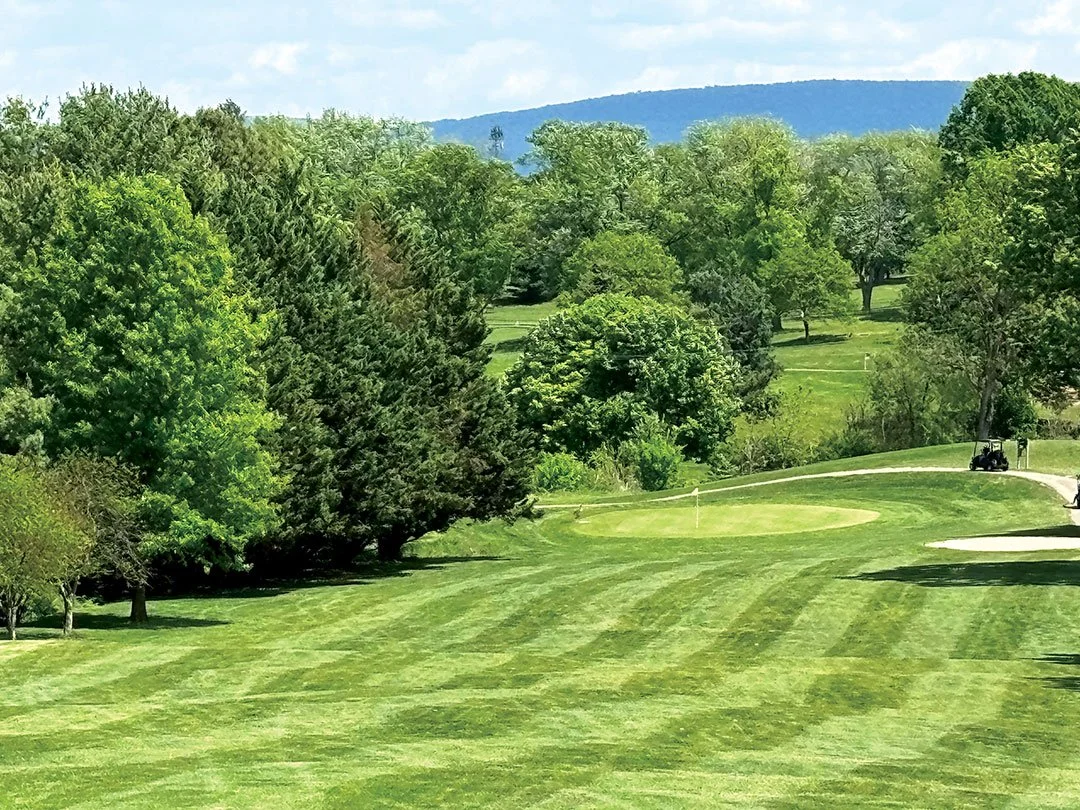
For nearly a century, the Greens at Hamilton Run has been a haven for local golfers and a target of local developers
By Bill Kamenjar
An official blueprint of the original course design (then known as Hagerstown Golf Club) hangs framed in the far corner of the modest pro shop and lounge along the Dual Highway. Dated July 1930, it reveals the line drawings for a nine-hole, 2,909-yard course with six par 4s, two par 3s and a par 5. The imprints of designer Dr. Thomas J.W. Brown of Washington, D.C., and J.B. Ferguson & Co. Engineers of Hagerstown reveal who built the course.
Parts of the layout have changed over its nearly 100-year existence but the mantra at the course, now known as the Greens at Hamilton Run, remains the same—to provide local
residents with a place to play golf and socialize. Though this sweet-spot plot of verdant, rolling terrain along Route 40 has seen its share of troubled times, it has persevered thanks to the love and loyalty local players have for it.
Today, it is difficult to imagine that the ambiance and intrinsic vibes are much different from the day the course opened during the heavy economic times of the Depression. Now, there are gas-powered carts, though many players still prefer to walk. Customers tap their credit cards rather than pay cash. The original clubhouse, a farmhouse along Route 40, sat where Burger King now churns out Whoopers.
But the first tee is still in the same place, and many of the nine original holes remain largely untouched. The course is a throwback to a time when golfers like Bobby Jones, Gene Sarazen and Walter Hagen dominated the game, and it clings to the timelessness and charm of its past.

Greens at Hamilton Run member Will Tharps.
And the course still serves the same purpose–a place for local golfers to be a member without spending a lot of money; a place for the up-and-coming generation of golfers to discover the game; an accessible course where you can play with a group of friends or just go out on your own and play a quick nine holes on a long summer evening.
After a breezy, nine-hole loop on the city-owned facility earlier this season, the Greens at Hamilton Run reveals a number of things about itself. The putting surfaces probably aren’t much faster than they were in 1930, which brings back the art of reading the grain of the grass. You can use your modern laser range finder, but the course still has the old-school 150-yard white and 100-yard red poles by which players gauged their distances for decades before sprinkler heads were marked with yardages to the center of the green. Groups are not limited to foursomes. A friend and I played alongside a fast-moving sixsome that included a guy in bare feet, perhaps the way the game was played before golf shoes became a thing. And in the day before modern agronomic standards allowed large greens sloping in several directions, it was courses like the Greens at Hamilton Run where putting surfaces not much bigger than your living room sloped from front to back and required the utmost in accuracy.
Upon finishing my round, I tried to remember the last time I played an ancient nine-hole course and wanted to play it again. For members, this is an everyday occurrence. Yet despite the popularity of the course, the city has made three efforts over the years to sell the property.
Most notably, in the late 1980s city officials targeted the prime real estate for commercial development, specifically aiming to replace the course with a strip shopping mall. But this, like the other two efforts, failed not because of planning or zoning issues but due to intense pushback from citizens.
In response to sale attempts, local residents and golfers formed an advocacy group called Save Open Space (SOS), led by community advocate Harry McAbee. The group successfully rallied public sentiment to block the commercial sale and preserve the acreage as public parkland and sued the city to keep the land as a golf course.
In a letter to the editor of the Hagerstown Herald-Mail in October 2017, McAbee’s son, Steven, recounted that many city leaders advocated for the sale. “In a long and bitter battle, the Rouse Company—the lowest bidder who was awarded the contract by the city to buy the property—withdrew from the case,” Steven McAbee wrote.
Rather than pursuing commercial development, the city shifted its focus to capital infrastructure and ecological stewardship. Instead of selling the land, the city has heavily invested in it, executing a major stormwater stream restoration project along Hamilton Run and implementing capital updates like the reconstruction of the fifth hole, which features the stream, and new cart paths.
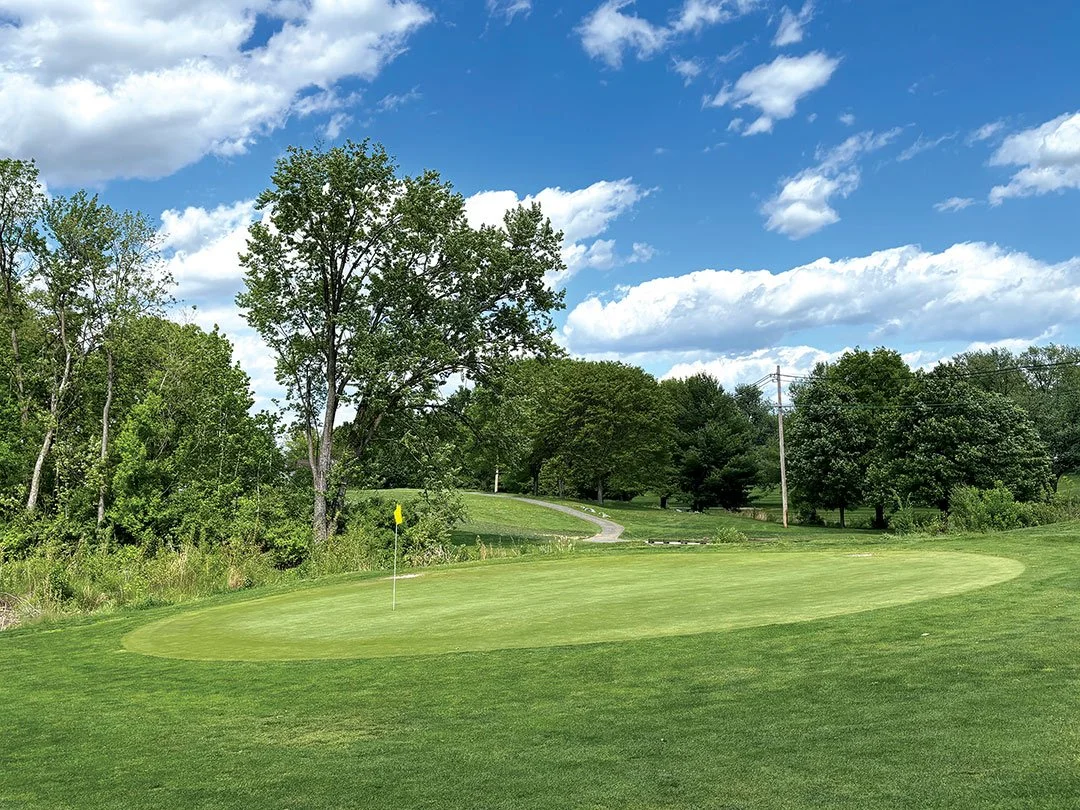
Other than the stream restoration project, the biggest change on the course occurred in 1956. Originally, the course layout stretched directly along the highway. When the state expanded Route 40, the construction claimed a significant portion of the course’s perimeter frontage. To accommodate the loss of land, the city relocated the exposed holes away from the new highway borders and fully transitioned the course into the nine-hole configuration that still exists today.
“We actually think it’s hysterical that you had to cross the street to play two more holes,” says clubhouse attendant Linda Murray.
Over time, a few additional design experts have been brought in to make necessary changes to Brown’s original creation. Even in 2026, adjustments and upgrades are being made. The bridge on par-5 second hole was raised this year and the green on the par-4 fifth was rebuilt. These improvements follow the stream restoration project completed in 2025.
What you’ll discover now is a self-contained, throwback layout nestled along Hamilton Run and featuring two par 5s, four par 4s and three par 3s, challenging for its difficult, if rather slow, greens. Golfers can enjoy a relatively quick round compared to other local courses, and the par-35 course is competitively priced to meet all budgets. The new clubhouse area includes food and beverages, an improved pro shop and an indoor dining area. A new exterior deck also provides a great place to relax between or after your rounds.
“It’s not a country club atmosphere. We don’t get hung up on dress codes and stuff like that,” says Dan Elgin, who grew up playing the layout when it was known as Hagerstown Municipal. “It’s a course where young kids can come out to play. Families, too. There are really few restrictions. And the guys who work out there really do a bang-up job keeping it playable. It’s just really a nice golf course to play.”
And Elgin is one who truly can endorse the venue’s ongoing evolution, having once driven the green on the par-4 first hole.
“Over the years, back in the day, it was not well maintained, and part of the reason was there was no sprinkler system,” he says. “I remember driving that green because the fairways in the summer were mostly dirt. But over time, the city put in an irrigation system, and now they are able keep the course green all year round. I can’t drive that green now, for sure.”
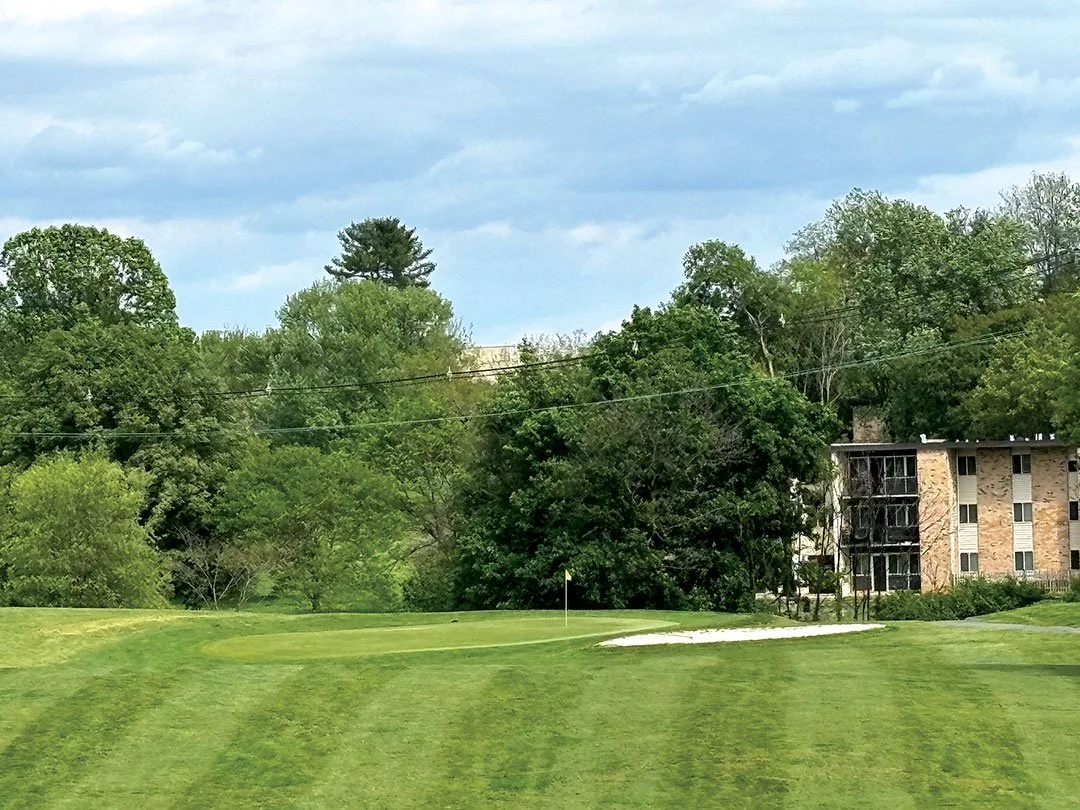
At The Greens at Hamilton Run, though they do care about good greens, they don’t especially care for fast rolling ones. If they did, the slopes on them would make them diabolical.
To show member loyalty to The Greens at Hamilton Run, Will Tharps offered some thoughts about his own experiences. Originally from Boston, the former resident of Hagerstown moved last year to Ellicott City but still makes the two-hour round-trip drive two or three times a week to play the course.
“I’ve only been a member here for 10 years, so I don’t know all the history,” Tharps says. “But people tell me all the time about the days when greens were across the street. People still talk about that.”
When alerted to the fact that the course at one time was slated to become a strip mall, Tharps was astounded. He seemed glad to hear that the community banded together to save it.
“It tells me that there are some things that are still valuable, other than money,” he says. “I am so glad to hear that. It can’t always be about the dollar. I’ve got family back in Boston, in Tennessee, in Georgia and other states, and I’ve played golf in all of them. But I always come back here. I like the municipal course atmosphere. It’s true to the game. People come here thinking it’s an easy course. But it’s not. You really have to play golf around these holes. And I enjoy that challenge.”
So, to say that The Greens at Hamilton Run is merely a survivor would not really be doing it justice. Over the course of nearly a century, this nine-hole charmer has been altered and nurtured in a way worthy of more than one trip around its fairways. And with it providing two sets of tees (for two different nine-hole yardages), the venue fully accommodates those who do.